Soft washing render is a low-pressure way to treat algae, lichen and mildew without stripping delicate exterior finishes.
Soft washing render is a careful cleaning method for exterior walls that need more intelligence than force. Render, painted masonry and softer stone can all be damaged by aggressive pressure. Soft washing uses low pressure and plant-safe biocides to lift algae, lichen and mildew at the source. It is designed to clean the growth causing the stain, not simply blast the surface until it looks temporarily brighter.
What does soft washing render involve?
Soft washing begins with assessment. A professional looks at the surface, the type of staining, the condition of the render and the surrounding areas. Cracks, failing paint, delicate edges, nearby planting and drainage all matter.
The treatment is then applied at low pressure. The biocide works on organic growth, helping to kill algae, lichen and mildew so the surface can stay clear for longer. In many cases, the treatment continues working after the visit, with staining fading further as the growth breaks down and weather helps release it.
This is quite different from pressure washing. Soft washing is slower in spirit, even when the work itself is efficient. It respects the material and allows the chemistry to do what brute force should not.
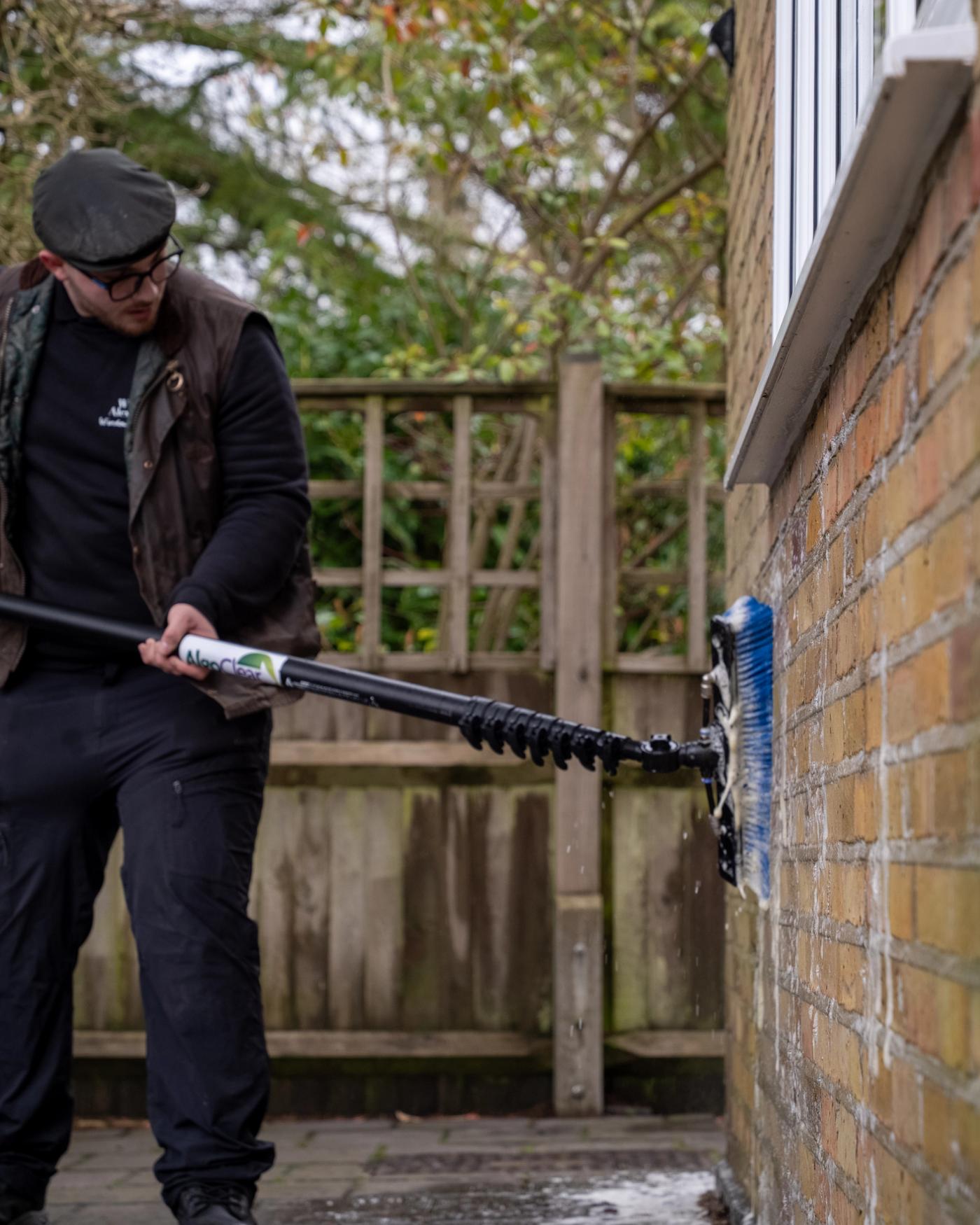
Why render needs a low-pressure method
Render is not the same as stone paving or concrete. It can be textured, painted, porous or weathered. High pressure may leave lines, strip coatings or force water into small weaknesses. On some finishes, it can permanently mark the surface.
Soft washing render avoids these risks by using low pressure. The purpose is to treat the living growth rather than erode the stained layer. This is particularly important for homes where the exterior finish is part of the architecture's character.
Low pressure also makes it easier to work around details such as windows, doors, vents and painted trim. A careful approach protects the surrounding elements as well as the wall itself.
What causes render to go green?
Green staining is usually algae. It appears when moisture and shade combine. North-facing walls, areas beneath trees, sections near hedges and walls that receive little direct sun are most vulnerable. Damp weather accelerates the process, while poor airflow slows drying.
Black or darker staining may be mildew, algae or ingrained organic matter. Lichen can appear as more stubborn patches. In London, traffic film may combine with biological growth, while in Kent, mature planting and garden moisture often play a larger role.
Is soft washing render safe?
Soft washing is safe for many rendered surfaces when carried out correctly. The important words are "when carried out correctly". The surface must be suitable, the treatment must be appropriate, and nearby areas must be protected.
Plant-safe biocides are used to treat the growth, and the low-pressure method reduces the risk of damaging the finish. A professional team will also consider where the treatment runs, how to protect planting, and whether any fragile surface areas need special care.
If render is cracked, loose or failing, cleaning may not be the first step. Those issues should be identified before treatment. Soft washing is a cleaning method, not a repair for damaged render.
Why soft washing lasts longer than pressure alone
Pressure washing can remove visible staining quickly, but if the biological growth remains alive at the root, it may return soon. Soft washing kills the growth so the surface stays clear far longer than pressure washing alone.
This matters on walls that have recurring algae. Simply blasting away the green colour may give a short-lived improvement, but the conditions that caused it remain. A soft wash tackles the source of the staining, making the result more durable.
Of course, no exterior surface can be kept permanently free from weather. Shade, moisture and spores will always exist. But treating the growth properly slows its return.
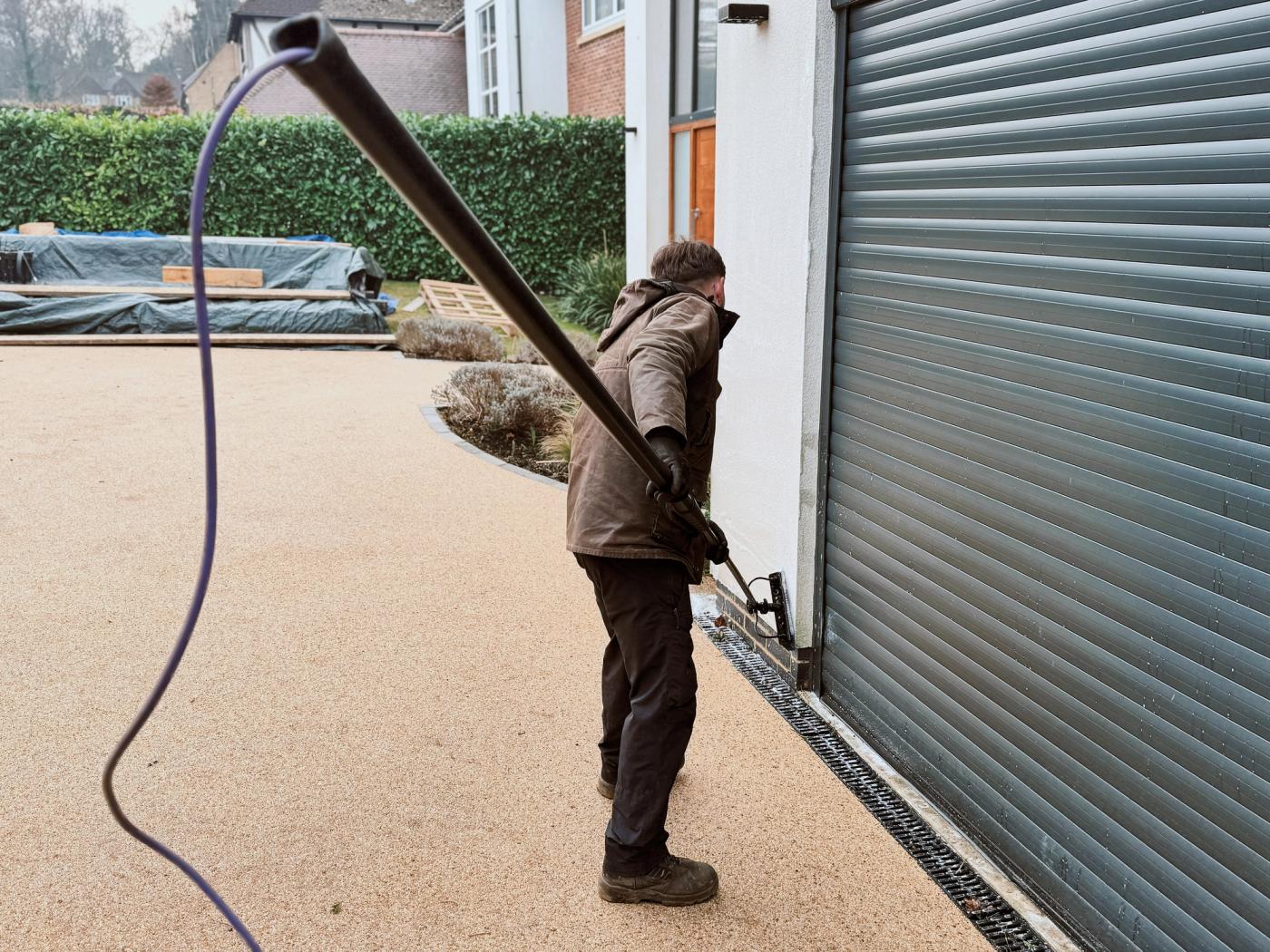
How soft washing compares with jet washing
Soft washing and jet washing are both useful, but they belong on different surfaces. Jet washing is used on hard surfaces such as driveways, paths and patios, with pressure matched to the material. It is excellent for lifting grime, algae and dirt from paving. On block paving, fresh kiln-dried sand should be brushed back into the joints afterwards.
Soft washing is better for render, painted masonry, softer stone and roofs, where pressure could be damaging. It uses treatment rather than force.
A well-planned exterior clean may involve both methods. The rendered wall may be soft washed, while the patio below is jet washed. The skill is in knowing which method belongs where.
When a combined clean makes sense
A combined clean is useful when a garden or frontage has several affected surfaces. For example, a shaded patio may be green underfoot, while the rendered wall beside it is stained with algae. Jet washing the patio and soft washing the wall creates a more complete result.
The same applies to driveways and front elevations. Hard ground surfaces may need controlled pressure, while painted masonry or render requires low-pressure treatment.
How to keep render cleaner after soft washing
After soft washing, the best maintenance is moisture control. Trim planting that touches walls. Keep gutters clear so water does not overflow onto render. Check downpipes and drainage. Avoid placing large pots directly against walls if they trap damp.
Regular window and uPVC cleaning also helps because dirty frames and sills can wash residue down the wall. A clean exterior works as a system. Each element supports the others.
If one area of render repeatedly stains faster than the rest, look for a cause. There may be a leaking gutter, dense shade, poor airflow or constant splashback from paving below.
When is the best time to soft wash render?
Spring is often ideal because it deals with growth that has built up through winter. Early summer is also popular, particularly before outdoor entertaining or property photography. Autumn can be suitable if damp, shaded walls have developed algae during the warmer months.
The exact timing depends on the surface condition. If staining is light, treatment may be straightforward. If growth is heavy and established, more patience may be needed as the treatment continues to work over time.
Do not wait until the wall looks heavily neglected. Soft washing is most effective as part of regular exterior care.
A careful clean for a considered home
Soft washing render is a thoughtful answer to a common problem. It recognises that exterior walls need protection as well as cleaning. By using low pressure and plant-safe biocides, it removes algae, lichen and mildew at the source without stripping the finish. For homes in London and Kent, it is a calm, effective way to restore freshness to render, painted masonry and other delicate exterior surfaces.
Common questions
What is soft washing render?
Soft washing render is a low-pressure cleaning method that uses plant-safe biocides to treat algae, lichen and mildew. It cleans the growth at the source rather than relying on force.
Is soft washing safer than pressure washing for render?
For many rendered surfaces, yes. High pressure can mark, strip or damage render, while soft washing uses low pressure and suitable treatment.
How long does soft washing take to show results?
Some improvement may be visible quickly, but the treatment can continue working after application. Stubborn organic staining may fade gradually over days or weeks.
Can soft washing be used on painted masonry?
Yes, soft washing can be suitable for painted masonry when the paint is sound and the surface is assessed first. It is often preferable to aggressive pressure washing.