Learn the early signs of blocked gutters, from overflowing rainwater to damp staining, and how careful ladder-free clearing protects your home.
The signs your gutters need cleaning are often quiet at first: a small drip where there should be a steady flow, a dark mark beneath the roofline, or leaves gathered around a downpipe. Left alone, these small warnings can become more troublesome. Gutters are there to move rainwater safely away from the house. When they are blocked with leaves, moss, silt and roof debris, water has nowhere useful to go, and the exterior begins to show it.
What are the main signs your gutters need cleaning?
The most obvious sign is water overflowing during rain. Instead of travelling along the gutter and down the pipe, it spills over the edge. This may happen in one place or along a whole run. During heavier rain, it can look like a curtain of water falling from the roofline.
Another common sign is staining on walls, render or brickwork. If water repeatedly escapes from a blocked gutter, it can leave dark marks beneath the roof edge. You may also notice green growth, algae or mildew around the affected area, especially where the wall stays damp.
Other signs include sagging gutters, plant growth from the channel, dripping joints, damp smells near external walls, or a downpipe that stays dry even while rainwater is pouring from above. If you can see leaves or moss sitting in the gutter from an upstairs window, it is time to act.
Why blocked gutters are more than a cosmetic problem
A blocked gutter can make a well-kept home look neglected, but the bigger issue is water management. Gutters protect walls, foundations, roof edges and exterior finishes by directing rainwater away from vulnerable areas. When that system fails, water can soak surfaces that were not designed to remain wet.
Overflowing gutters can stain render, mark painted masonry and encourage algae. They can drip onto window frames, fascias and sills, making them harder to keep clean. In colder months, trapped water can add weight and stress to the guttering itself.
For period homes, the risks can be greater because older materials often need careful moisture control. Brick, lime mortar, painted timber and decorative details can all suffer when water repeatedly runs where it should not.
Regular gutter cleaning is a simple form of prevention. It keeps water moving and helps the exterior stay dry, clean and properly presented.
What collects inside gutters?
Most gutter blockages are a mixture of natural debris and roof material. Leaves are the most visible, especially in autumn, but they are rarely alone. Moss from roof tiles, twigs, grit, silt, seed pods and bird debris can all settle in the channel.
Over time, this material breaks down into a dense, wet layer. It can hold water like compost, creating a heavy blockage that prevents proper flow. Seeds may take root, which is why small plants sometimes appear to grow from gutters.
Downpipes are particularly vulnerable. A gutter may look fairly clear from the ground, but debris can gather at the outlet and stop water draining. Once the downpipe is blocked, the entire run can overflow.
How does ladder-free gutter clearing work?
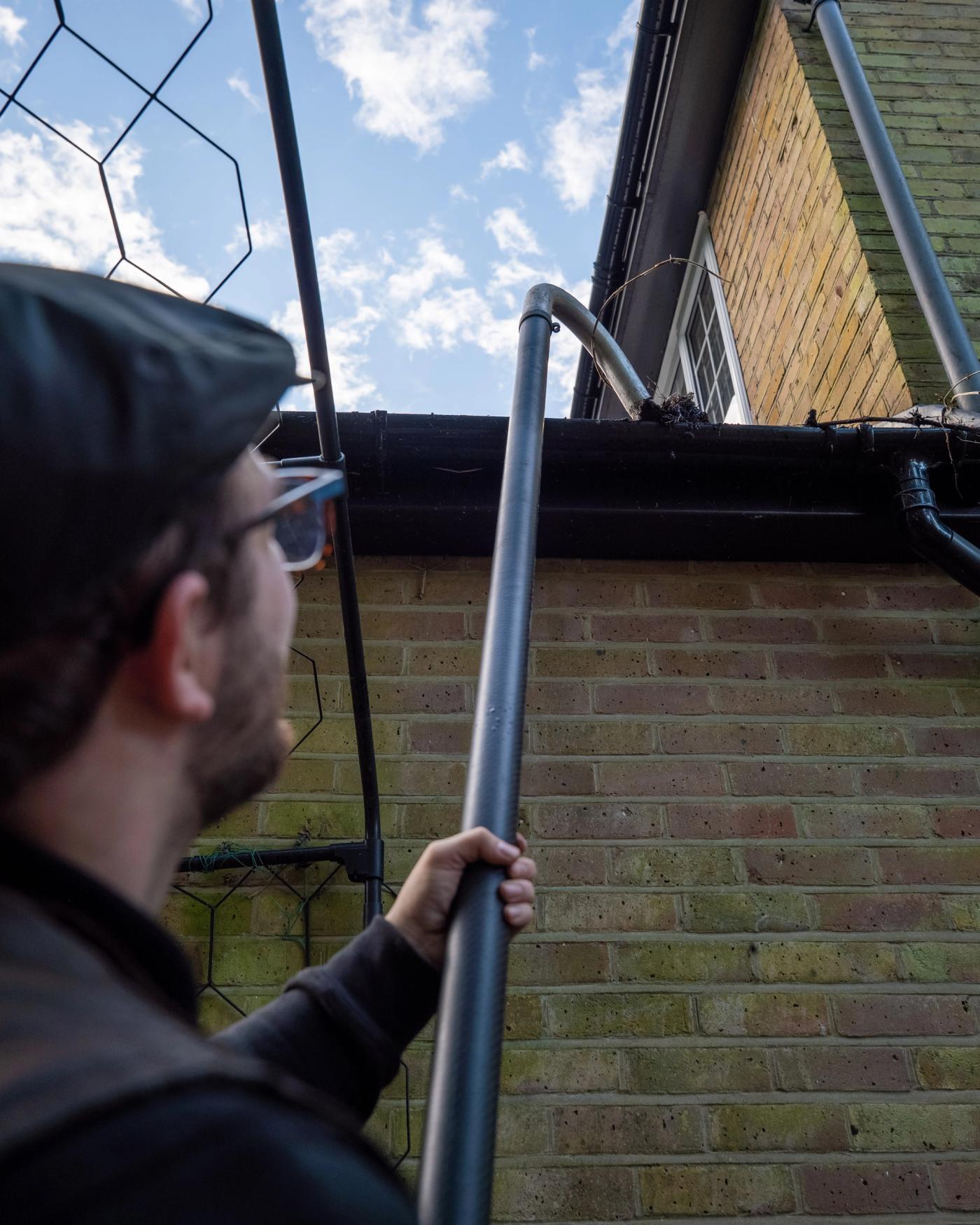
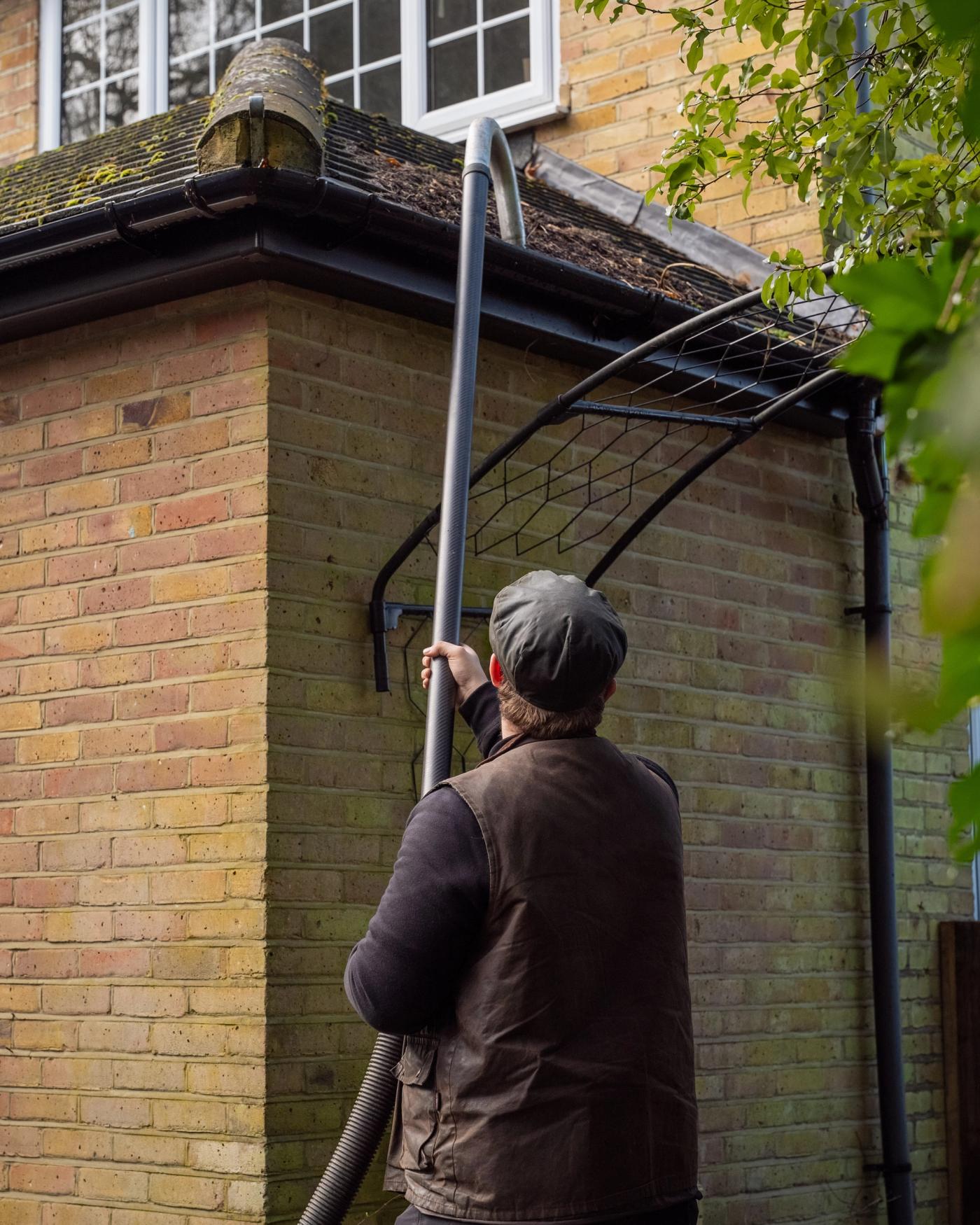
Willow Alexander clears gutters using a high-suction SkyVac system from the ground. This ladder-free method allows the team to remove debris safely and thoroughly, with the whole run cleared in one pass. It is fully insured and avoids unnecessary ladder work against the property.
The SkyVac system is designed to lift leaves, moss and silt from the guttering with powerful suction. It is especially useful for taller homes, awkward rooflines and properties where access is limited by planting, railings or narrow side paths.
Working from the ground also reduces disturbance. There is no need to rest ladders against delicate exterior surfaces in most cases, and the process is efficient for both townhouses and larger homes.
How often should gutters be cleared?
Most homes should have their gutters checked and cleared at least once or twice a year, depending on exposure. Autumn is the most important time for properties near trees because falling leaves can quickly fill gutters. A second check in spring is useful after winter rain, storms and roof moss movement.
Homes beneath mature trees may need more frequent attention. So may properties with complex rooflines, valleys, extensions or hidden gutter runs. If a house has had previous overflow issues, it is wise to clear the gutters before the wettest weather arrives rather than waiting for symptoms to appear.
In London, gutters can collect roof grit, leaves and urban debris. In Kent, the mix is often more seasonal, with moss, leaves and organic matter from nearby trees. Both settings benefit from a planned routine.
What happens if you ignore blocked gutters?
Ignoring blocked gutters rarely improves the situation. Debris tends to compact, making the blockage heavier and more difficult for rainwater to pass through. During persistent rain, water can overflow repeatedly in the same areas, marking walls and soaking the ground below.
If water runs down exterior walls, it can encourage algae and mildew. If it spills onto windows and frames, it may leave dirty streaks that return soon after cleaning. If it collects around the base of the property, it can contribute to damp conditions near foundations or lower brickwork.
Gutters can also begin to strain under the weight of wet debris. Brackets may loosen, joints may drip, and sections can sag. At that point, what began as routine maintenance may become repair work.
The earlier the problem is dealt with, the simpler it usually is.
Why roof moss often causes gutter problems
Roof moss is one of the most common reasons gutters block. It loosens in patches, especially after wet or windy weather, then slides into the gutter. Once there, it holds moisture and combines with silt to form a dense obstruction.
Homes with shaded roof slopes are particularly prone to moss. North-facing areas, tree cover and damp conditions can all encourage growth. If you regularly find moss in your gutters, it may be worth considering roof cleaning or soft washing where appropriate, because simply clearing the gutter deals with the symptom rather than the source.
Soft washing can lift algae, lichen and mildew at the source on suitable surfaces using low pressure and plant-safe biocides. For roofs, it must be handled carefully and with the right method for the material.
How gutters affect windows, fascias and kerb appeal
Gutters sit close to some of the most visible parts of the home: roofline, fascias, soffits, upper walls and windows. When they overflow, those areas can quickly lose their clean appearance. White uPVC may develop green staining. Painted masonry can show damp streaks. Windows below the overflow may become marked soon after they have been cleaned.
This is why gutter clearing and soffit, fascia and window care often belong together. A home can have spotless windows, but if the gutter above them is spilling dirty water, the result will not last.
Willow Alexander can restore uPVC frames, soffits and fascias to a clean, even white, helping the roofline look fresh again once the underlying water issue has been dealt with.
When should you book gutter cleaning urgently?
Book gutter cleaning promptly if water is overflowing during rain, if you can see plants growing from the gutter, or if there are damp stains beneath the roofline. You should also act quickly if a downpipe appears blocked, a gutter section is sagging, or water is dripping close to doors, windows or external electrics.
After storms, it is worth checking the exterior from the ground. Twigs, moss and leaves can move suddenly in bad weather, especially on properties with mature trees nearby.
If you are preparing for autumn or winter, do not wait for heavy rain to reveal the issue. A clear gutter is one of the simplest ways to help a home cope with wet weather.
A small task with a large protective role
Gutter clearing is easy to overlook because the problem is above eye level. Yet it plays an important role in protecting the exterior fabric of a home. By recognising the signs early and keeping the system clear, you help rainwater do what it is meant to do: move away from the building calmly and efficiently. A clean gutter is not just a maintenance detail. It is part of keeping a home dry, bright and well cared for.
Common questions
What are the signs your gutters need cleaning?
Overflowing rainwater, damp staining below the roofline, plants growing from the gutter, dripping joints and dry downpipes during rain are all common signs. You may also notice moss, leaves or silt visible from an upstairs window.
How often should gutters be cleared?
Many homes benefit from gutter clearing once or twice a year. Properties near mature trees, shaded roofs or heavy moss may need more frequent attention.
Can gutters be cleared without ladders?
Yes. Willow Alexander uses a high-suction SkyVac system from the ground, which clears the whole run in one pass and avoids unnecessary ladder work in most situations.
Can blocked gutters stain my walls and windows?
Yes. When water overflows, it can run down walls, frames and windows, leaving dirty streaks and encouraging algae or mildew. Clearing the gutter helps stop the cause of the staining.