Hard water marks can make clean windows look cloudy. Learn what causes them, what helps prevent them, and when professional assessment is sensible.
Hard water stains on windows can make otherwise clean glass look tired, cloudy or speckled. They often appear as pale spots, chalky runs or stubborn marks that do not lift with an ordinary wipe. For homeowners who care about a clear view and a properly maintained exterior, they can be especially frustrating. The key is understanding what caused the staining, how long it has been there, and whether it is surface mineral residue or more ingrained marking that needs careful assessment.
How do hard water stains on windows form?
Hard water stains on windows form when water containing minerals dries on the glass. As the water evaporates, it leaves deposits behind. These deposits may come from sprinkler spray, hose water, dripping pipes, leaky gutters, pressure washing run-off, or ordinary tap water used for home cleaning.
At first, these marks may sit on the surface. They look like pale spots or cloudy patches, especially when sunlight catches the glass. If they are left for a long time, or if the glass is repeatedly exposed to mineral-rich water, the staining can become more difficult to remove. In severe cases, the surface may become etched or marked in a way that needs specialist advice.
This is why prevention matters. Fresh mineral deposits are easier to deal with than old, baked-on staining. Regular pure water window cleaning helps because deionised water dries clear and leaves no mineral deposits behind.
Why ordinary window cleaning may not remove mineral marks
A standard household clean may remove dust, fingerprints and surface grime, but mineral stains behave differently. They are not simply dirt. They are deposits left behind after water dries. If they have bonded to the glass, a quick spray and cloth may only polish over the problem.
Some homeowners try stronger household products or abrasive pads. This can be risky. Glass can be scratched, frames can be marked, seals can be affected and surrounding finishes can be damaged. The wrong method may make a small problem more visible.
A professional assessment looks at the extent of the staining, the condition of the glass and the likely cause. Willow Alexander can assess existing, ingrained hard-water staining and advise on careful removal. Severe or etched staining should never be promised away, because the condition of the glass matters.
What makes some stains harder to remove?
Several factors affect how stubborn the staining becomes. The mineral content of the water, the amount of sun exposure, the age of the marks and the type of glass all play a role. South-facing windows can bake residue onto the surface more quickly. Windows beneath a recurring drip may build layers of mineral deposits over time.
The source also matters. A one-off splash from a hose is different from months of sprinkler spray or a faulty gutter dripping in the same place. If the cause is still active, cleaning the stain will only be a temporary fix.
How pure water cleaning helps prevent new staining
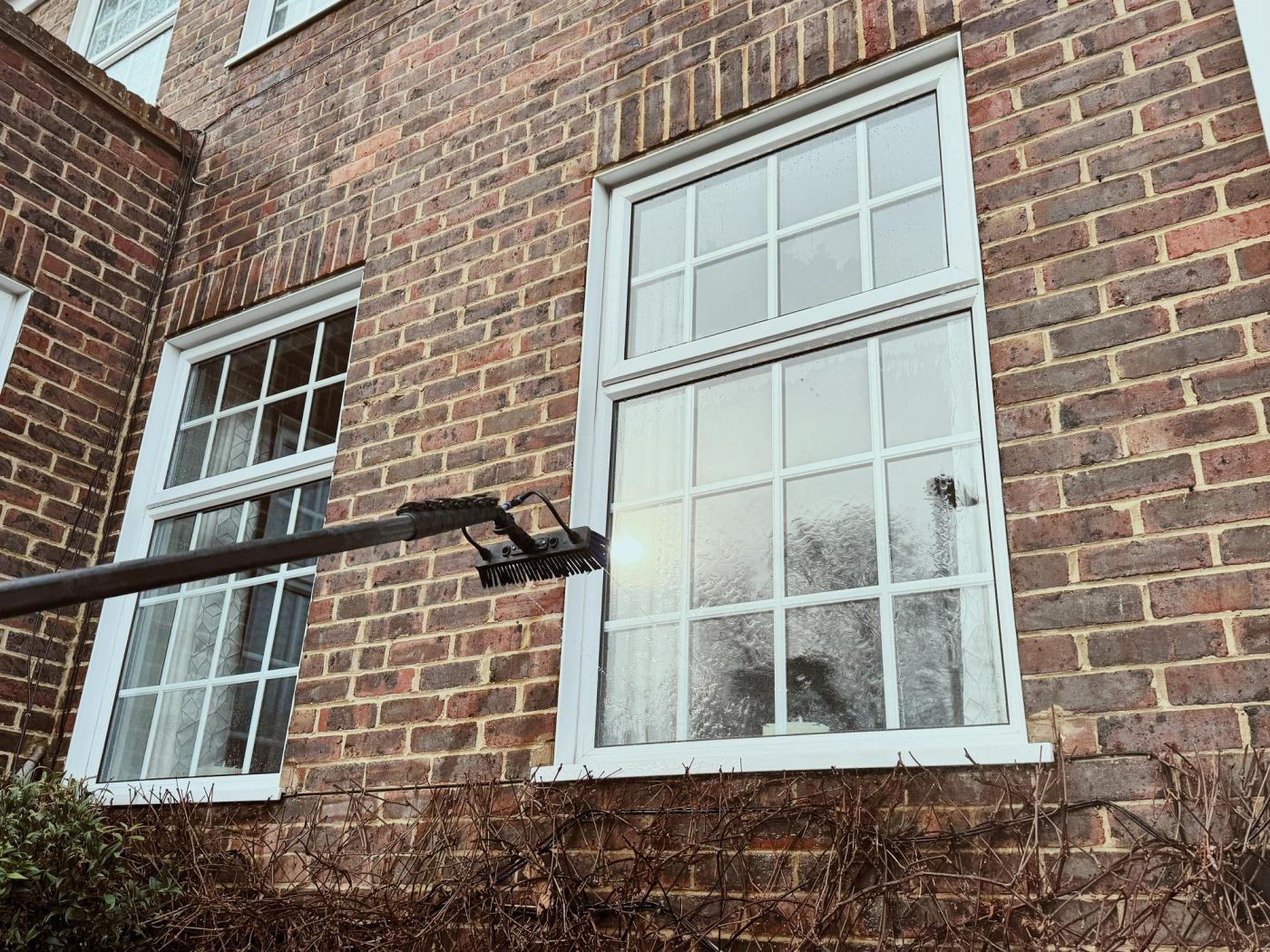
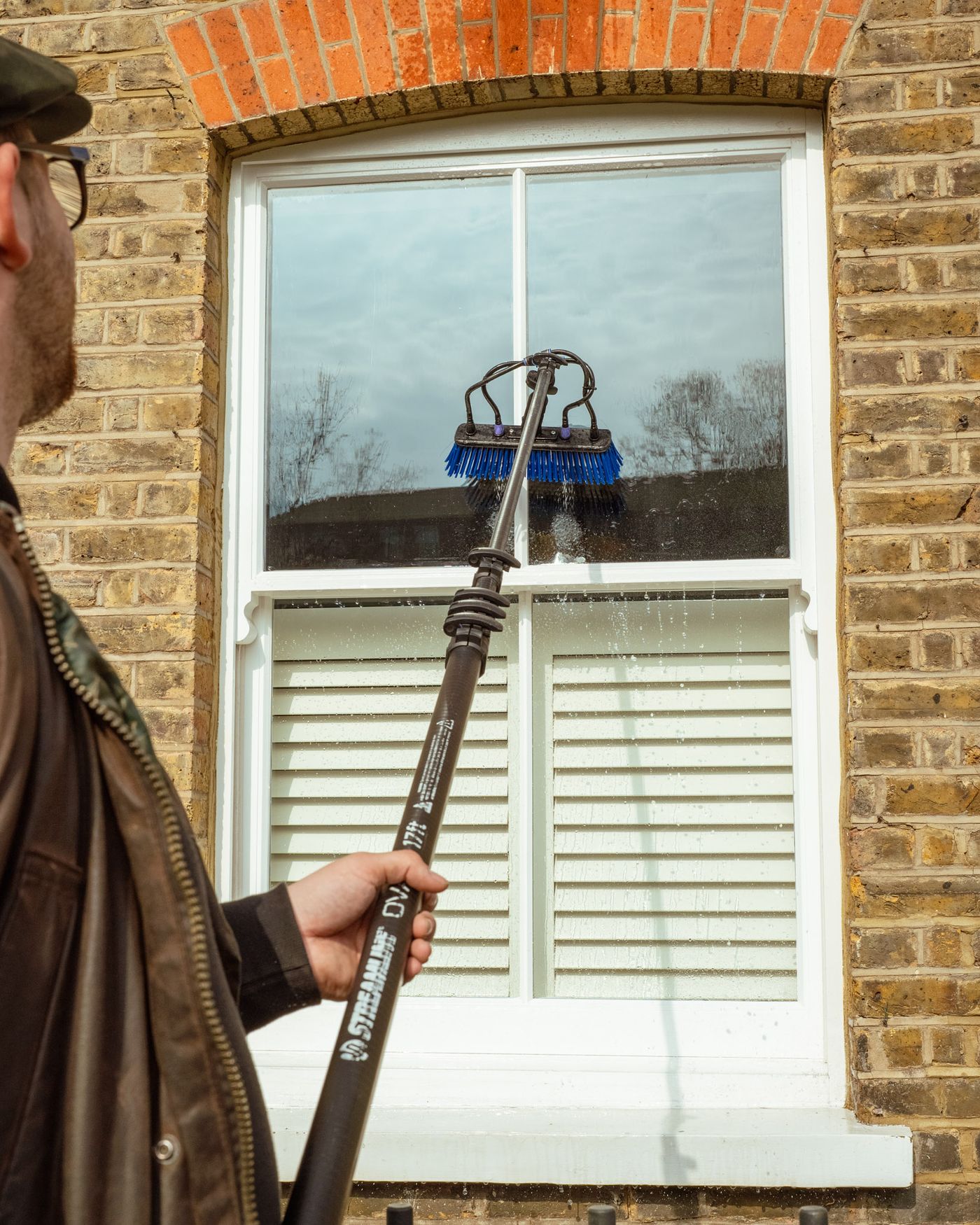
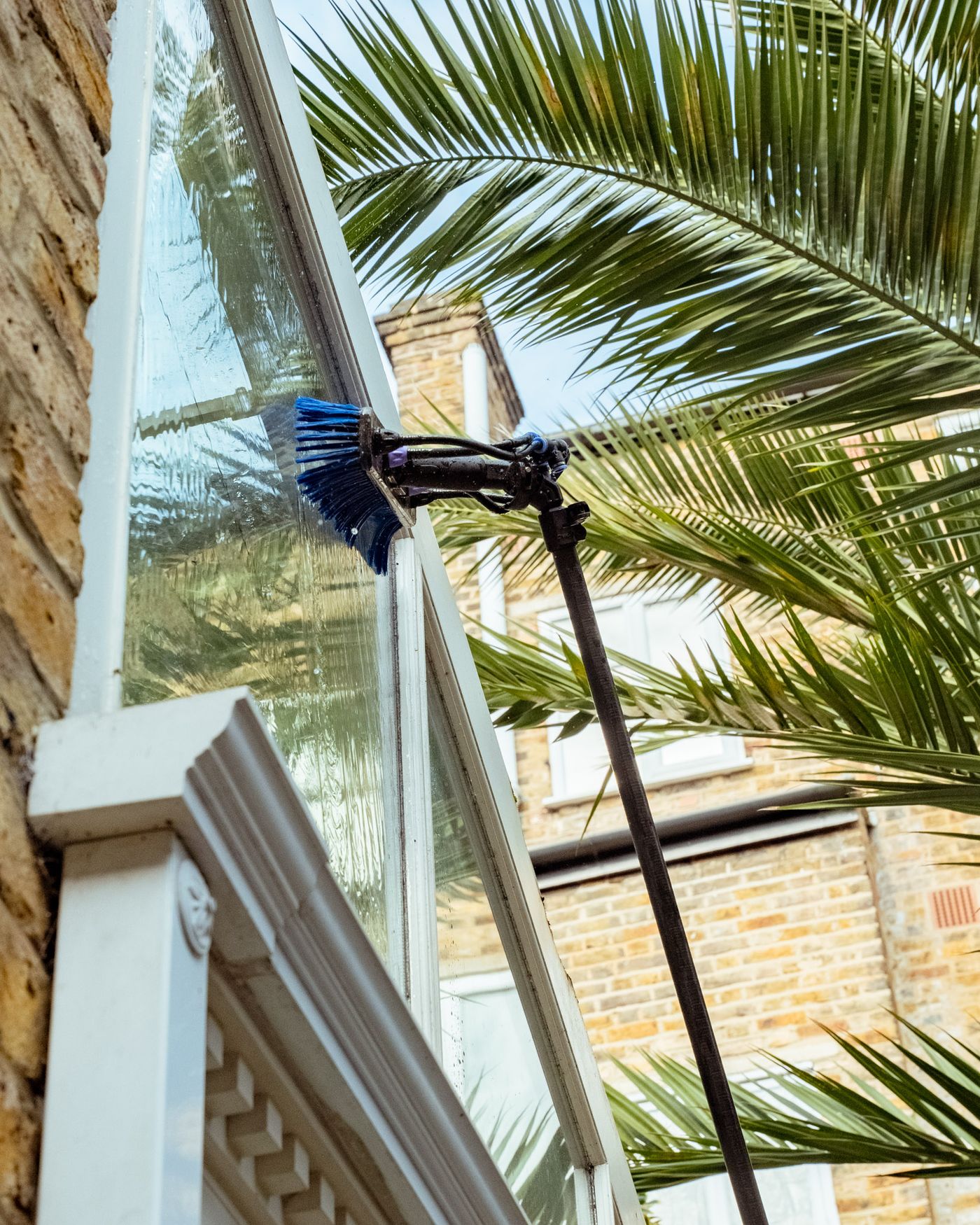
Pure water window cleaning is one of the best ways to prevent new hard-water and mineral spotting. Willow Alexander uses a pure water, deionised pole system from the ground. Because the water has had minerals removed, it dries clear, leaves no mineral deposits and produces a spotless, streak-free finish without chemicals.
This is different from cleaning with tap water. Tap water may look clear, but it contains dissolved minerals. When it dries on glass, those minerals can remain. Pure water avoids that problem.
Pure water is also purer than rainwater, so light rain should not spoil a fresh clean. Rain usually marks glass when it moves existing dirt or residue across the surface. If the glass has been cleaned and rinsed properly, light rain has far less to disturb.
What you can do at home to reduce hard water marks
The most useful step is to stop mineral-rich water drying on the glass. Adjust garden sprinklers so they do not spray windows, conservatory glass or exterior doors. Take care when using a hose near windows. Check whether overflow from gutters, pipes or planters is dripping onto glass.
After cleaning garden furniture, patios or paths, rinse nearby glass with care if water has splashed. Avoid letting tap water dry repeatedly on sunny panes. If you are cleaning lower windows yourself between professional visits, use a gentle method and dry the glass properly, but avoid abrasive products.
It is also worth looking at the surrounding exterior. Dirty frames, blocked gutters and stained sills can all wash residue back onto the glass. Keeping frames, soffits and fascias clean helps the window as a whole stay fresher.
Why frames and sills matter
A window is not only the pane. Mineral deposits and dirt often sit along sills, lower rails and frame edges. When it rains, residue can run down onto the glass. White uPVC can also become dull, green or uneven, making clean glass appear less fresh.
Willow Alexander restores uPVC frames, soffits and fascias to a clean, even white. Pairing this with regular window cleaning gives a more complete result, especially on homes where the roofline or frames have been neglected.
When professional help is the better option
Professional help is sensible when marks do not lift with gentle cleaning, when the staining covers a large area, when windows are high or awkward to reach, or when the glass may be delicate or coated. It is also sensible for conservatories, rooflights and large glazed doors, where repeated mineral marks can be very visible.
A careful team will not promise a guaranteed result on severe, etched staining. Instead, they will assess the glass and advise on the safest approach. The goal is to improve the appearance without damaging the surface or surrounding details.
For homes across Chelsea, Kensington, Fulham, Bromley, Sidcup, Sevenoaks, Beckenham and Chislehurst, regular maintenance is usually the best defence. Once windows are cleaned with pure water on a suitable rhythm, new mineral spotting is much less likely to develop from the cleaning process itself.
A clearer view starts with prevention
Hard water stains on windows are best handled early, before surface deposits become stubborn. The most effective long-term approach is to reduce mineral-rich water reaching the glass, keep gutters and frames in good order, and maintain the windows with pure deionised water that dries clear. Where staining is already established, careful assessment matters. With the right method, the glass can often be improved, and future spotting can be prevented far more effectively.
Common questions
What causes hard water stains on windows?
Hard water stains are caused when mineral-rich water dries on glass and leaves deposits behind. Common sources include hose spray, sprinklers, dripping gutters, pipe leaks and tap water used for cleaning.
Can hard water stains be removed from glass?
Some surface mineral marks can be improved with careful treatment. Severe or etched staining may not be fully removable, so the glass should be assessed before any result is promised.
Does pure water window cleaning prevent hard water stains?
Yes. Pure water cleaning helps prevent new mineral spotting because deionised water dries clear and leaves no mineral deposits on the glass.
Should I use abrasive pads on window stains?
No. Abrasive pads can scratch glass and damage frames or seals. Stubborn hard water stains should be assessed and treated carefully.