Pure water window cleaning gives glass a crisp, streak-free finish without chemicals. Here is why it works so well for London and Kent homes.
Pure water window cleaning is one of those quietly intelligent methods that suits a well-kept home. It is precise, restrained and effective. Instead of using detergents that must be polished away, it relies on deionised water that has been purified to remove minerals and impurities. Applied through a specialist pole system from the ground, it cleans glass, frames and sills, then dries clear. The finish is spotless and streak-free, without chemical residue.
Why pure water window cleaning works so well
Ordinary tap water contains dissolved minerals. If it is left to dry on glass, those minerals can leave small white spots or streaks. Pure water has had those impurities removed. Because it contains no minerals, it dries clear.
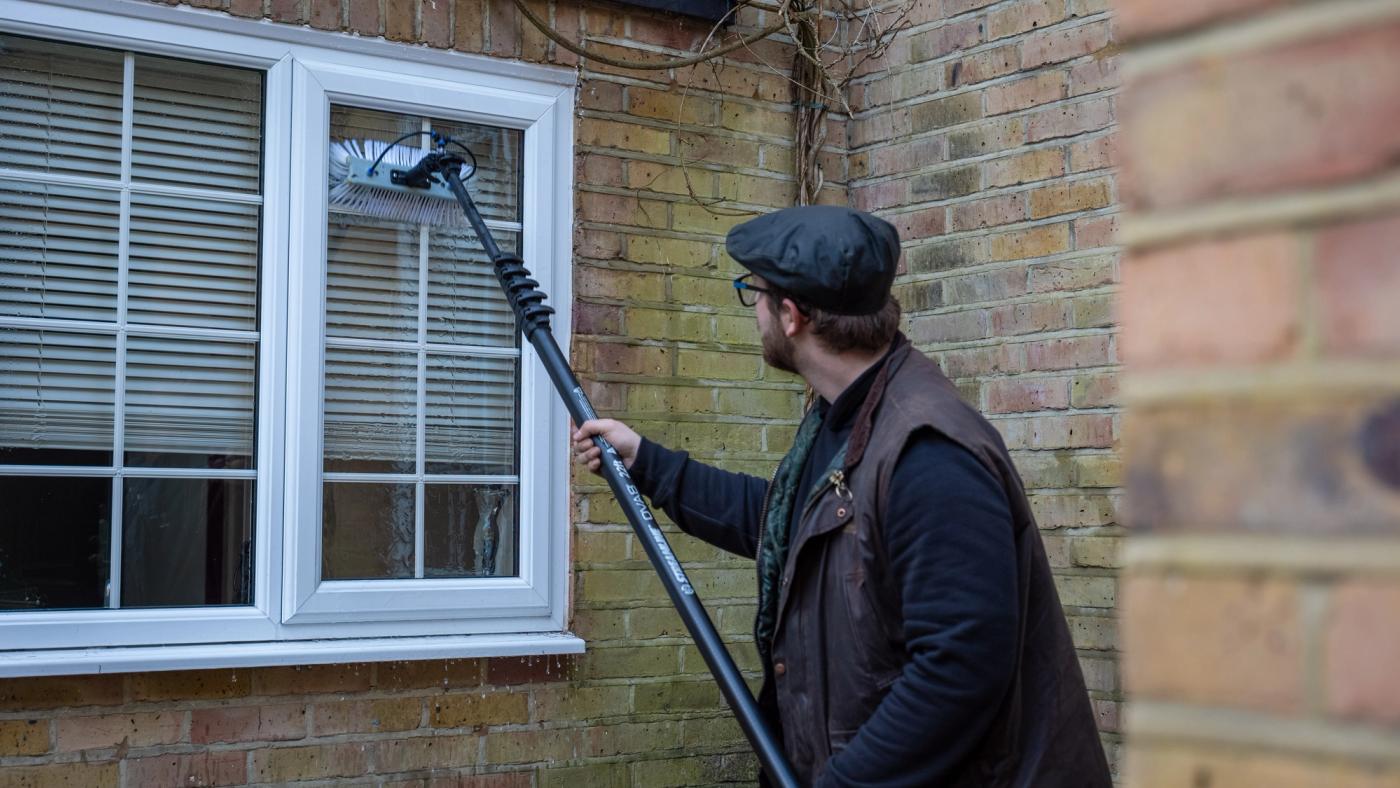
The cleaning process is simple but clever. A soft brush loosens dirt from the glass, frame and sill. Pure water rinses the surface thoroughly. As it dries, it leaves no detergent film behind. This matters because soap residue can attract dust, which makes windows dirty again more quickly.
Pure water is also purer than rainwater. Many homeowners worry that a shower after cleaning will ruin the result, but light rain should not spoil freshly cleaned windows when the glass has already been properly rinsed. Rain marks usually appear when rain moves existing dirt around. If the dirt has been removed, there is far less to mark the glass.
What makes the finish look so clear?
A clear finish comes from removing both dirt and residue. Traditional cleaning can work beautifully, but if any detergent, mineral content or cloth fibre remains, the glass may show it when sunlight hits. Pure water avoids that problem by leaving nothing behind.
This is especially valuable on large panes, glass doors, rooflights and upper windows. The bigger the pane, the more obvious streaks become. A deionised rinse gives the water time to sheet across the surface and dry naturally.
Frames and sills also affect the finish. If they are left dirty, rain can pull grime back onto the glass. Pure water cleaning usually includes the surrounding frame and sill, helping the whole opening stay cleaner.
Why no chemicals are needed
Pure water does not need chemical assistance because the filtration process makes it highly effective at attracting dirt. Once the water touches the surface, it begins to draw in impurities. The brush then agitates the dirt, and the rinse carries it away.
For homeowners who prefer thoughtful, low-residue care, this is an appealing approach. There is no strong scent, no soapy run-off and no film left on the glass. It is a clean method in the truest sense.
Why the pole system matters
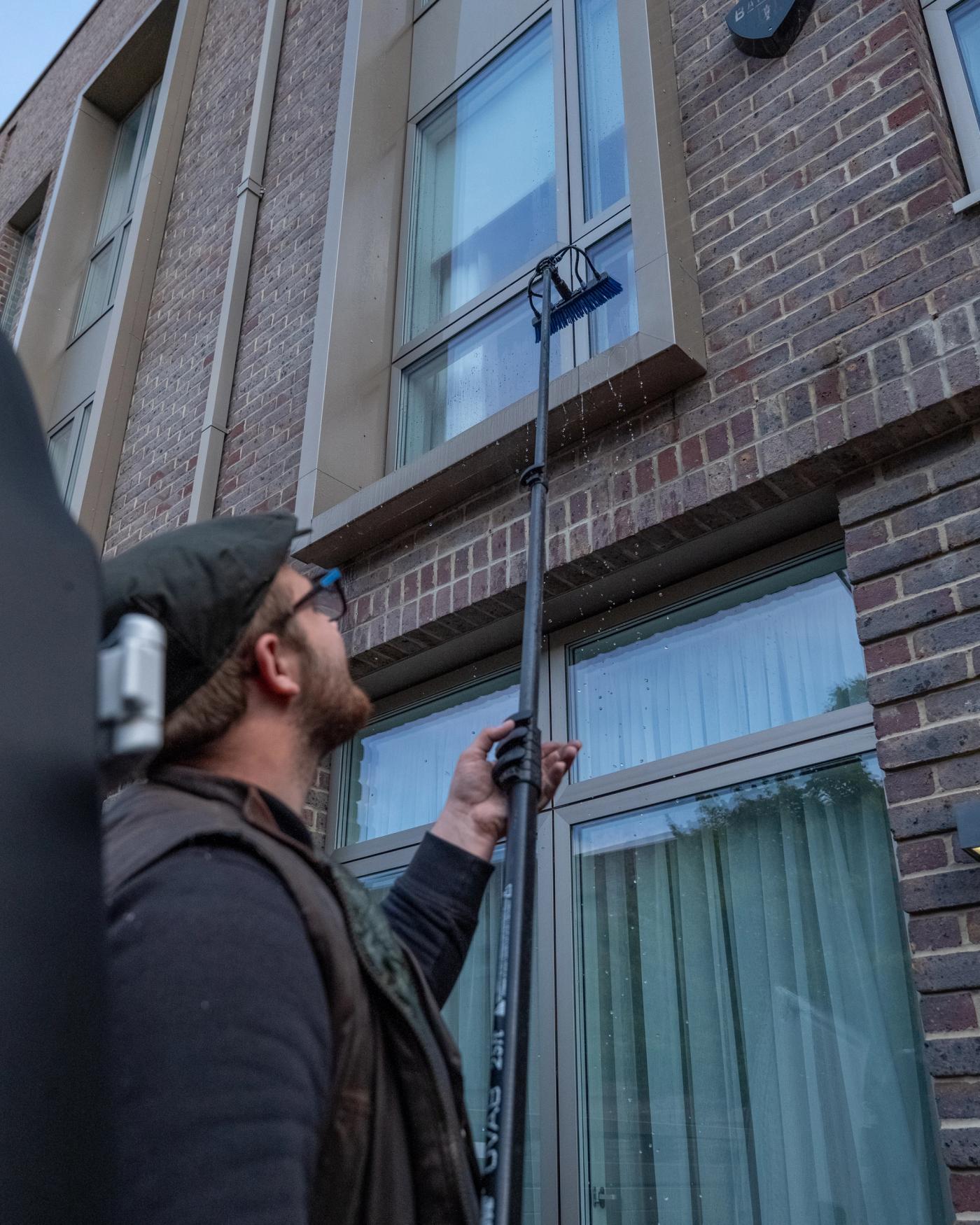
The pole system allows many windows to be cleaned safely from the ground. This is particularly useful for London townhouses, upper-storey sash windows, rear extensions and homes where ladder access is awkward. It also reduces the need to lean ladders against painted surfaces, uPVC or delicate exterior details.
The reach of the system means that more than the easy panes are cleaned. Upper windows, dormers, hard-to-reach rear glazing and windows above conservatories can all be approached with greater consistency.
A home looks properly maintained when all windows are clear, not only those that can be reached by hand. The pole system supports that even standard across the whole property.
Pure water cleaning for London homes
In London, windows collect traffic film, dust and fine airborne residue. Street-facing elevations in Chelsea, Kensington and Fulham can dull quickly, especially after dry spells or nearby building work. The residue is often subtle at first, appearing as a grey veil across the glass and frames.
Pure water window cleaning is well suited to this environment because it thoroughly rinses away film without adding chemicals. Regular cleaning helps prevent residue from becoming ingrained around sills, seals and lower rails.
For period properties, the method is especially useful because tall windows and detailed frames need a careful, repeatable approach. Clean glass improves the street presence of the home, while clean frames keep the facade feeling fresh.
Pure water cleaning for Kent homes
In Kent, the challenge is often more organic. Pollen, tree sap, leaf residue and bird mess can gather on windows, particularly around gardens and mature planting. Homes in Bromley, Sidcup, Sevenoaks, Beckenham and Chislehurst may have larger rear elevations, French doors, garden rooms and conservatory glazing that benefit from regular care.
Pure water cleaning removes this seasonal build-up without chemical residue. It is a strong choice for homes where the garden view matters, because clean glass changes the way rooms feel from the inside as well as the outside.
A six-weekly rhythm may suit many Kent homes, while properties close to trees or exposed roads may need more frequent cleaning.
How frames, soffits and fascias affect the result
A flawless pane is only part of the picture. If the frame is grey, the sill is marked, or the fascia above is green, the window will not look its best. White uPVC in particular can go green or yellow over time through algae, pollution and weathering.
Willow Alexander restores uPVC frames, soffits and fascias to a clean, even white. Paired with pure water window cleaning, this gives the exterior a more complete refresh. The glass becomes clear, the frame becomes bright, and the roofline no longer distracts from the rest of the property.
When to add a deeper uPVC clean
Regular window cleaning helps maintain frames, but some uPVC needs a more thorough restoration. Consider this if the frames remain dull after ordinary cleaning, if green algae sits in corners, or if fascias have streaks beneath the gutters.
It is also worth considering before summer entertaining, property photography or seasonal maintenance. Clean uPVC can make a house look sharper without any decorative work.
How often should pure water window cleaning be booked?
Most homes benefit from professional window cleaning every four to eight weeks. Homes near busy roads, trees or exposed weather may need the shorter end of that range. More sheltered properties may stay fresh for longer.
The best schedule is judged by how the windows look just before the next clean. If they are still bright, the interval is working. If they look hazy, spotted or grey, the clean is probably too far apart.
Because pure water cleaning leaves no detergent film behind, it supports regular maintenance well. Each visit removes fresh residue before it becomes stubborn, helping the home stay consistently bright.
A refined method for regular care
Pure water window cleaning is effective because it is not trying to do too much. It uses the right water, the right reach and a thorough rinse to achieve a clean finish. For London and Kent homes, where presentation, care and consistency matter, it offers a dependable way to keep windows, frames and sills looking their best. The result is not loud or overdone. It is simply clear, fresh and properly maintained.
Common questions
What is pure water window cleaning?
Pure water window cleaning uses deionised water that has had minerals and impurities removed. It is applied with a pole system to clean glass, frames and sills, then dries clear.
Why does pure water not leave streaks?
Pure water contains no minerals, so it does not leave chalky spots as it dries. Because no detergent is used, there is also no soap residue to smear or attract dust.
Will rain spoil a pure water window clean?
Light rain should not spoil freshly cleaned windows. Rain usually marks glass when it moves existing dirt around, but pure water cleaning removes that dirt.
Is pure water cleaning suitable for upper windows?
Yes. The pole system allows many upper windows to be cleaned safely from the ground, making it suitable for townhouses, larger homes and awkward glazing.