Period and listed homes need careful exterior cleaning, with low-pressure methods, pure water glass care and respect for delicate materials.
Period property exterior cleaning should begin with respect. Older homes have character because of their materials, proportions and details, but those same qualities often need more careful handling. Sash windows, painted masonry, softer stone, delicate render, cast iron rainwater goods, timber, rooflines and decorative features can all be harmed by aggressive cleaning. The goal is not to make an old building look new. It is to keep it clean, dry, presentable and cared for without stripping away the qualities that make it special.
Why period property exterior cleaning needs a gentler approach
Period and listed homes were often built with materials that behave differently from modern surfaces. Brick, lime mortar, stone, timber and older coatings can be sensitive to pressure, moisture and harsh products. A method that works on a modern driveway may be entirely wrong for a historic facade.
Exterior cleaning should therefore be surface-led. Glass and frames may be cleaned with pure water. Algae on render, painted masonry or softer stone may need low-pressure soft washing with plant-safe biocides. Gutters may need careful clearing to prevent overflow. Hard surfaces may be jet washed only where suitable, with pressure matched to the surface.
If a property is listed, owners and managers should be mindful of permissions and conservation responsibilities before undertaking work that could affect historic fabric. Cleaning should always be considered, restrained and appropriate.
Windows: clarity without unnecessary risk
Windows are central to period architecture. Tall sash windows, fanlights, French doors and smaller panes all catch light and define the facade. Cleaning them well improves the whole building.
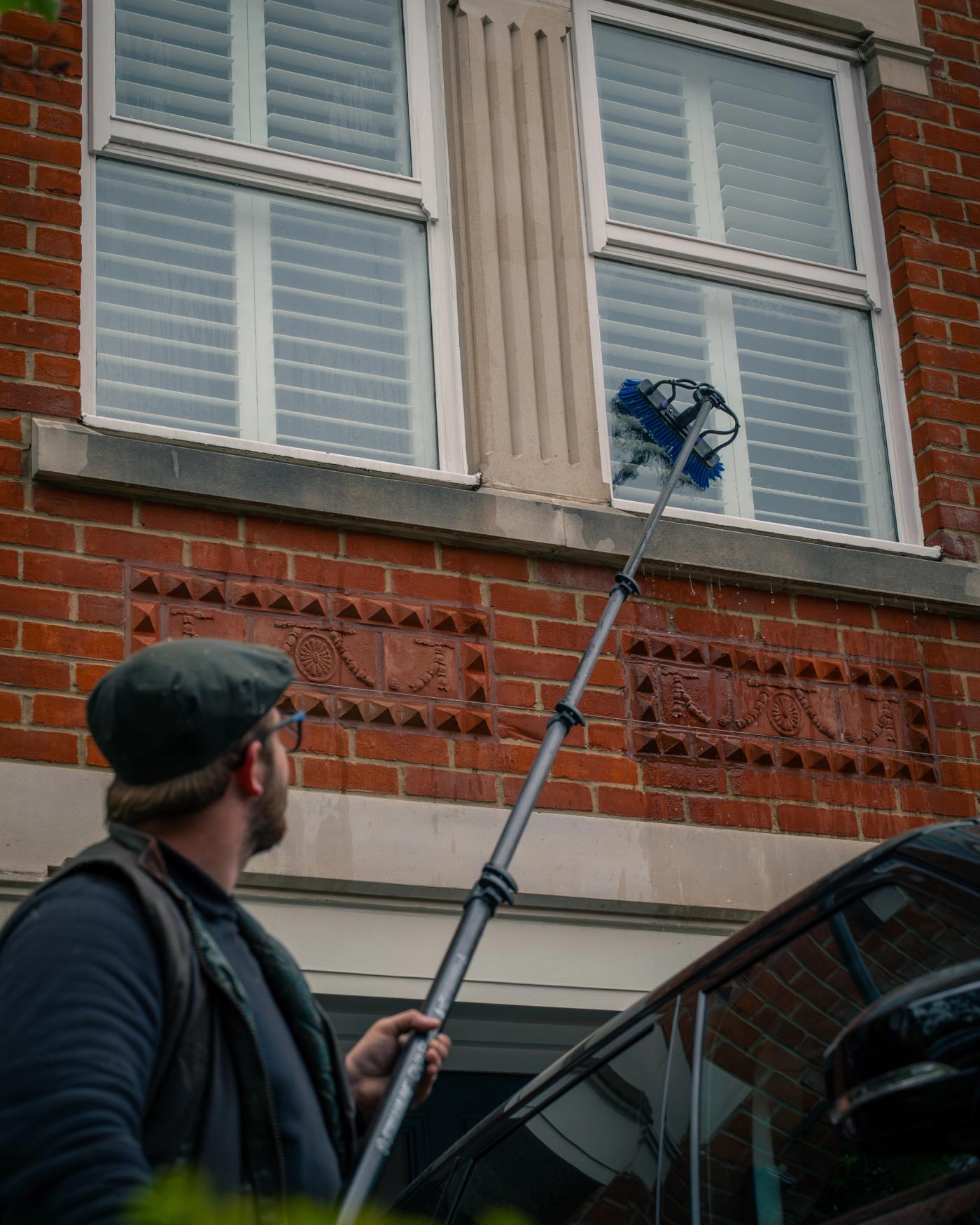
Willow Alexander uses a pure water, deionised pole system from the ground, leaving a spotless, streak-free finish with no chemicals. Pure water dries clear, leaves no mineral deposits and is purer than rainwater, so light rain should not spoil a fresh clean.
Working from the ground can reduce the need for ladders against delicate paintwork, stone or timber in many situations. It also helps reach upper windows safely where access permits. Frames and sills should be treated carefully, especially if they are older, painted or weathered.
Soft washing for render, painted masonry and stone
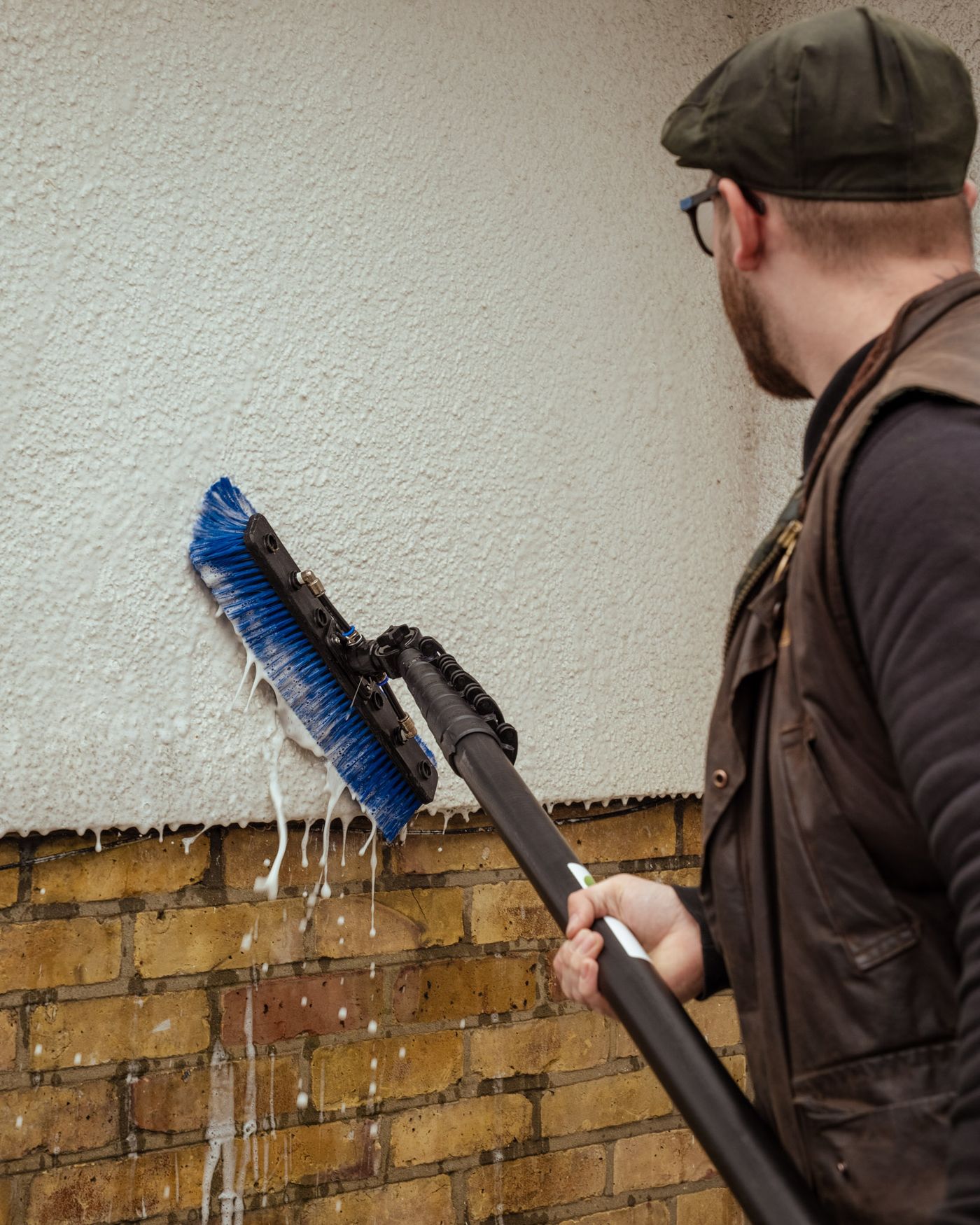
Organic staining is common on period homes. Algae, lichen and mildew appear where moisture lingers, especially on shaded walls, garden elevations and areas beneath trees. The temptation may be to pressure wash, but this can be damaging.
Soft washing uses low pressure and plant-safe biocides to lift algae, lichen and mildew at the source. It is suitable for surfaces such as render, painted masonry and softer stone when assessed properly. It kills the growth so surfaces stay clear far longer than pressure washing, without stripping the finish.
The key is assessment. Cracks, failing paint, loose render, soft stone and historic details must all be considered before cleaning begins.
Why pressure should be used sparingly
High pressure can remove more than dirt. It can erode mortar, lift paint, scar stone, force water into cracks and leave uneven marks. On older buildings, water movement is particularly important. Materials that need to breathe should not be saturated carelessly.
Surface-matched cleaning protects both appearance and fabric. It may take more thought, but it is the safer route.
Gutters and water management
For period homes, keeping rainwater moving properly is essential. Blocked gutters can overflow onto brick, stone, render, timber windows and decorative details. Water staining may then be mistaken for age when the real issue is a maintenance problem above.
Willow Alexander clears gutters ladder-free using a high-suction SkyVac system from the ground, fully insured, clearing the whole run in one pass. This is useful for many period properties where ladder placement may be awkward or undesirable.
Cast iron or heritage-style gutters should be treated with care. The goal is not just to remove leaves, but to protect the roofline and facade from repeated wetting.
Rooflines, soffits and fascias
Many period and older homes have painted timber, uPVC replacements or a mixture of roofline materials. Each should be cleaned according to its condition. White uPVC can be restored to a clean, even white, but older painted timber may need a gentler approach and may reveal areas where repainting or repair is more appropriate than cleaning alone.
Overflowing gutters often mark fascias and soffits. Before cleaning the visible staining, the cause should be addressed. Otherwise, the same dirty water will return.
This sequence matters: clear the water path, then clean the surface.
Cladding, conservatories and later additions
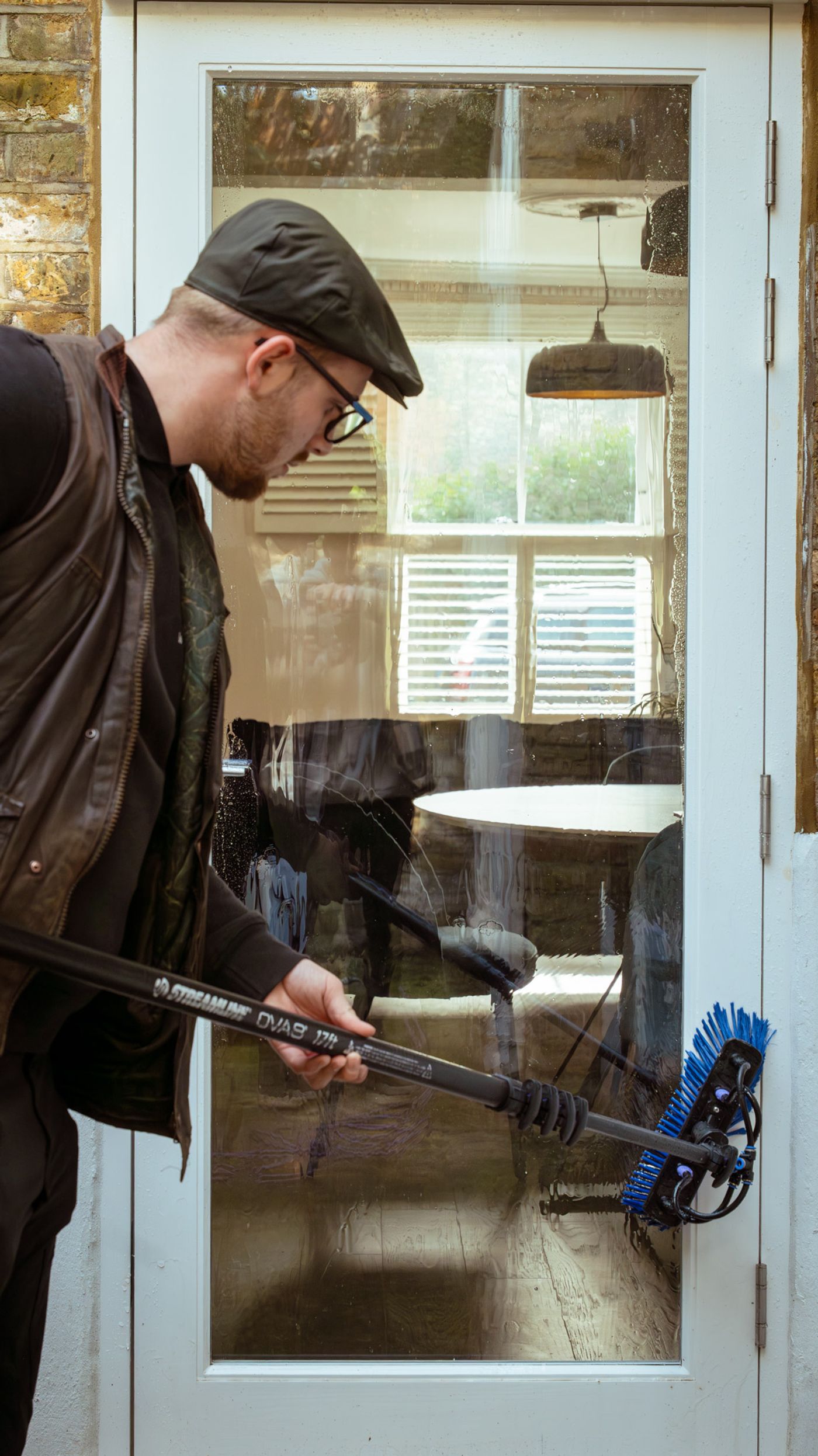
Many period homes have later additions, such as conservatories, garden rooms, extensions or cladding. These newer elements may need different cleaning methods from the original building. Conservatory glass and frames can often be cleaned with pure water. Algae on conservatory roofs or cladding may require low-pressure soft washing. Hard surfaces nearby may need surface-matched jet washing.
A good exterior cleaning plan recognises these layers. The original facade, later glazing and garden structures are all part of the property, but they should not be treated as though they are the same material.
Commercial and managed period properties
Period property exterior cleaning is also important for commercial and managed buildings. Offices, shopfronts and converted period properties need to look cared for while respecting the architecture. Tenants, visitors and clients notice dirty glass, stained stone and neglected entrances quickly.
Willow Alexander serves commercial clients, including offices, shopfronts, managed and period properties across London and Kent. The company is accredited by the Federation of Window Cleaners and fully insured with public liability cover, which is important when working around valued buildings and public areas.
For managed properties, planned maintenance is usually better than reactive cleaning. It allows windows, gutters, walls and rooflines to be cared for before visible decline sets in.
How often should a period exterior be cleaned?
There is no universal schedule. Windows may need regular pure water cleaning. Gutters should be checked seasonally, especially after leaf fall or storms. Render, stone and painted masonry should be soft washed when organic growth appears, rather than attacked with pressure. Hard surfaces should be cleaned when they become slippery or visually tired.
Observation is the best guide. Look for water staining, green growth, blocked gutters, mineral spots on glass and dirty sills. Small signs often reveal where maintenance should focus.
For listed homes, always consider whether proposed works may need specialist conservation advice or permissions.
A careful clean preserves character
The exterior of a period or listed home should never be cleaned with a one-size method. Its materials, age and details deserve patience. Pure water window cleaning, ladder-free gutter clearing, low-pressure soft washing and surface-matched jet washing all have their place when used thoughtfully. The best result is not a harshly scrubbed building, but one that looks fresh, dry, well cared for and true to itself.
Common questions
How should period property exterior cleaning be approached?
It should be approached carefully, with methods matched to the material. Pure water suits glass, soft washing can treat suitable stained walls, and gutters should be kept clear to prevent water damage.
Can you pressure wash a listed building?
High pressure can damage older materials, so it should be avoided unless a surface has been properly assessed and is suitable. Listed buildings may also require conservation guidance.
Is pure water window cleaning suitable for sash windows?
Yes, pure water cleaning can be suitable for many sash windows, with care taken around frames, paintwork and condition. The method dries clear and uses no chemicals.
Why are gutters especially important on period homes?
Blocked gutters can overflow onto brick, stone, render and timber, causing staining and moisture problems. Keeping gutters clear helps protect the exterior fabric.