White uPVC can turn green or yellow through algae, pollution and weathering. Learn why it happens and how careful cleaning restores a clean, even finish.
Knowing how to clean uPVC frames properly matters because white uPVC shows everything. It frames the windows, defines the roofline and has a strong effect on how fresh the exterior feels. Over time, uPVC can turn green with algae, yellow with weathering, or grey with traffic film and dust. The change is often gradual, then suddenly obvious. Restoring it to a clean, even white can lift the whole property, especially when paired with spotless glass.
How to clean uPVC frames without making them patchy
The safest approach is to clean uPVC with suitable methods that remove surface dirt, algae and staining without scratching or dulling the material. Harsh abrasives can leave marks. Strong household chemicals may affect seals, finishes or surrounding surfaces. A professional clean uses controlled techniques and the right products for the condition of the uPVC.
Window frames, soffits and fascias are not always evenly soiled. The lower edge of a frame may hold traffic film. A shaded fascia may be green. A sunny section may have yellowed slightly. Cleaning needs to account for these differences, otherwise the result can look patchy.
Willow Alexander restores uPVC frames, soffits and fascias to a clean, even white. That evenness is important. It is what makes the exterior feel properly cared for rather than quickly wiped down.

Why does white uPVC go green?
Green staining is usually algae. It appears where moisture lingers, especially on shaded elevations, north-facing walls, roofline details and frames near trees or hedges. Once algae takes hold, it can spread along seals, corners and textured areas where dirt gathers.
Soffits and fascias often go green because they sit close to gutters and roof edges. If gutters overflow, dirty rainwater can run across uPVC, leaving streaks and encouraging more growth. Frames below overhanging trees may also green more quickly because leaves and pollen feed organic build-up.
In Kent, greener settings and mature planting often contribute to algae. In London, green staining may combine with darker traffic film, creating a dull, uneven look.
Why does uPVC go yellow?
Yellowing can come from several sources. Sun exposure, age, pollution, nicotine residue on some older properties, and ingrained dirt can all alter the appearance of white uPVC. Sometimes the surface has not truly yellowed throughout. It is coated with a film that changes the perceived colour.
This is why careful cleaning can make a marked difference. Removing oxidised grime, algae and pollution reveals a cleaner, brighter surface beneath. However, expectations should be realistic. Very old or degraded uPVC may not return to a perfect new appearance, but it can often be greatly improved.
How often should uPVC frames be cleaned?
uPVC frames should be cleaned regularly as part of window maintenance, especially where they are exposed to traffic film, pollen or damp shade. If frames are cleaned each time the windows are professionally cleaned, dirt is less likely to become ingrained.
Soffits and fascias usually need less frequent attention, but they should be checked seasonally. Many homes benefit from a more thorough roofline clean once or twice a year, depending on exposure. Properties near trees, busy roads or overflowing gutters may need it more often.
The best schedule is guided by appearance. If the glass is clean but the frames look green, grey or yellow, the exterior will still feel tired.
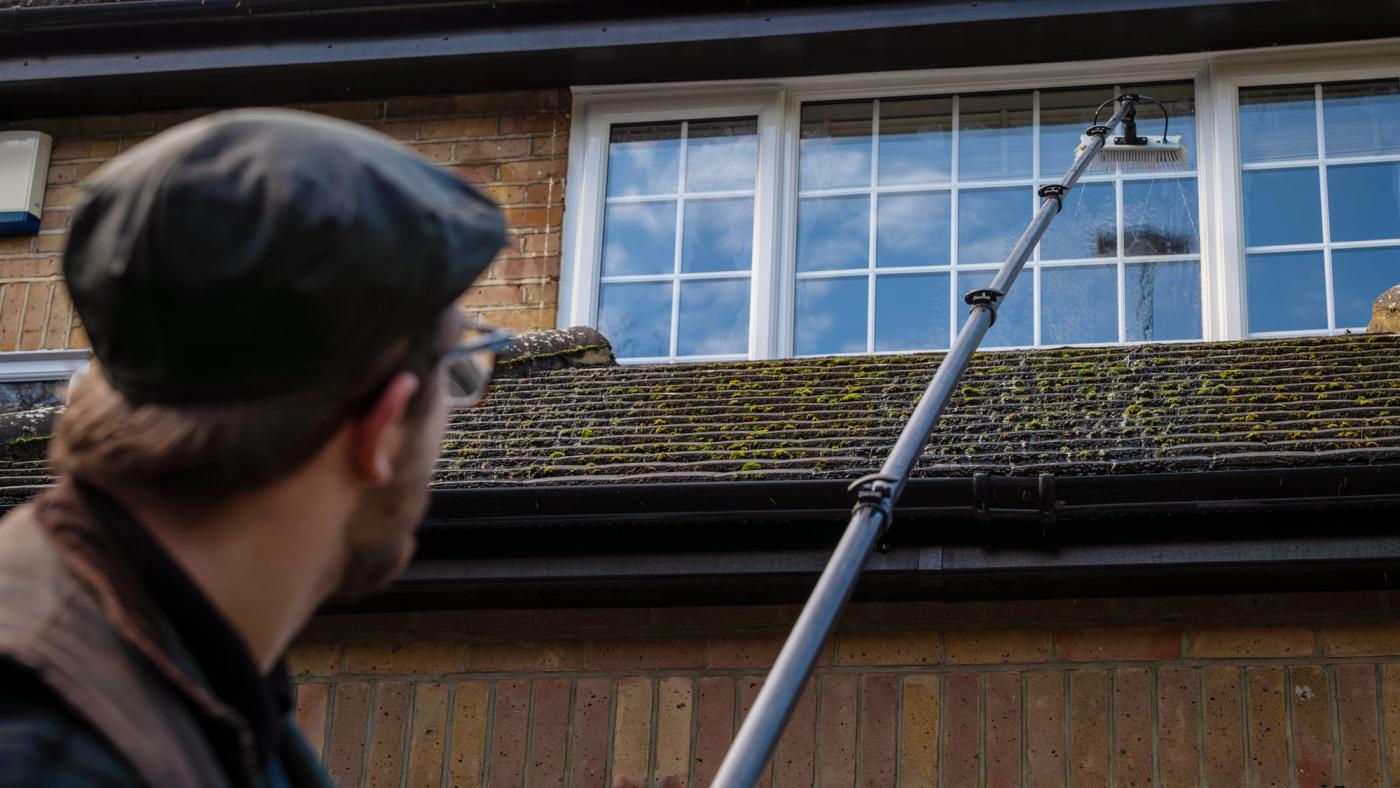
Why frames, soffits and fascias matter to kerb appeal
uPVC details create the outline of a home. Window frames sharpen the facade. Fascias define the roof edge. Soffits sit in shadow but still influence how fresh the building looks. When these areas are stained, the whole exterior can feel less cared for.
This is particularly noticeable on homes with white uPVC against brick, render or painted masonry. Green streaks under the gutter, yellowed frames around clean glass, or grey sills beneath bright windows all draw the eye.
Restoring uPVC is one of the most effective ways to refresh the exterior without changing the building. It is maintenance rather than decoration, but the visual effect can be significant.
How gutters affect uPVC staining
Gutters and uPVC are closely connected. If gutters are blocked, water may overflow onto fascias, soffits and upper window frames. That water often carries roof debris, moss, silt and organic matter. As it dries, it leaves streaks and encourages algae.
If your fascias keep turning green or streaked, it is worth checking the gutters. Willow Alexander clears gutters ladder-free using a high-suction SkyVac system from the ground, clearing the whole run in one pass. Once the water is flowing correctly, the cleaned uPVC is more likely to stay fresh.
Can regular window cleaning help keep frames white?
Yes. Pure water window cleaning helps because it cleans glass, frames and sills with deionised water from the ground. The water leaves a spotless, streak-free finish without chemicals, and because it dries clear, there is no residue left behind to attract more dirt.
Regular cleaning prevents the everyday build-up that makes uPVC look grey. It also stops dirt from sitting in corners and seals for too long. For homes in London, this is useful against traffic film. For homes in Kent, it helps with pollen, algae and garden debris.
A regular window cleaning rhythm, supported by periodic soffit and fascia cleaning, keeps the whole exterior more consistent.
What should you avoid when cleaning uPVC yourself?
Avoid abrasive pads, scouring powders and harsh solvents. These can scratch or dull the surface, making future dirt cling more easily. Avoid using too much pressure around seals, vents and older joints. Take care with ladders, especially around upper windows and roofline areas.
It is also wise to avoid treating every stain as the same problem. Green algae, grey pollution film and yellowing may need different attention. A single strong product used everywhere can create uneven results.
For lower frames, gentle maintenance between professional visits can help. Wipe away obvious dirt with suitable mild cleaning methods and keep sills clear of leaves, cobwebs and debris. Leave higher, awkward or heavily stained areas to a professional team.
How uPVC restoration fits into seasonal care
Spring is a natural time to refresh uPVC because winter damp often leaves rooflines and frames looking dull. It also prepares the home for brighter days, when white details are more visible. Early summer is useful before entertaining, photography or garden use.
Autumn is another important moment. Leaves, moss and blocked gutters can stain fascias and soffits. Clearing gutters and cleaning uPVC before winter helps the exterior cope better with wet weather.
If you are planning broader exterior maintenance, combine uPVC cleaning with window cleaning, gutter clearing and soft washing where render or painted masonry has developed algae.
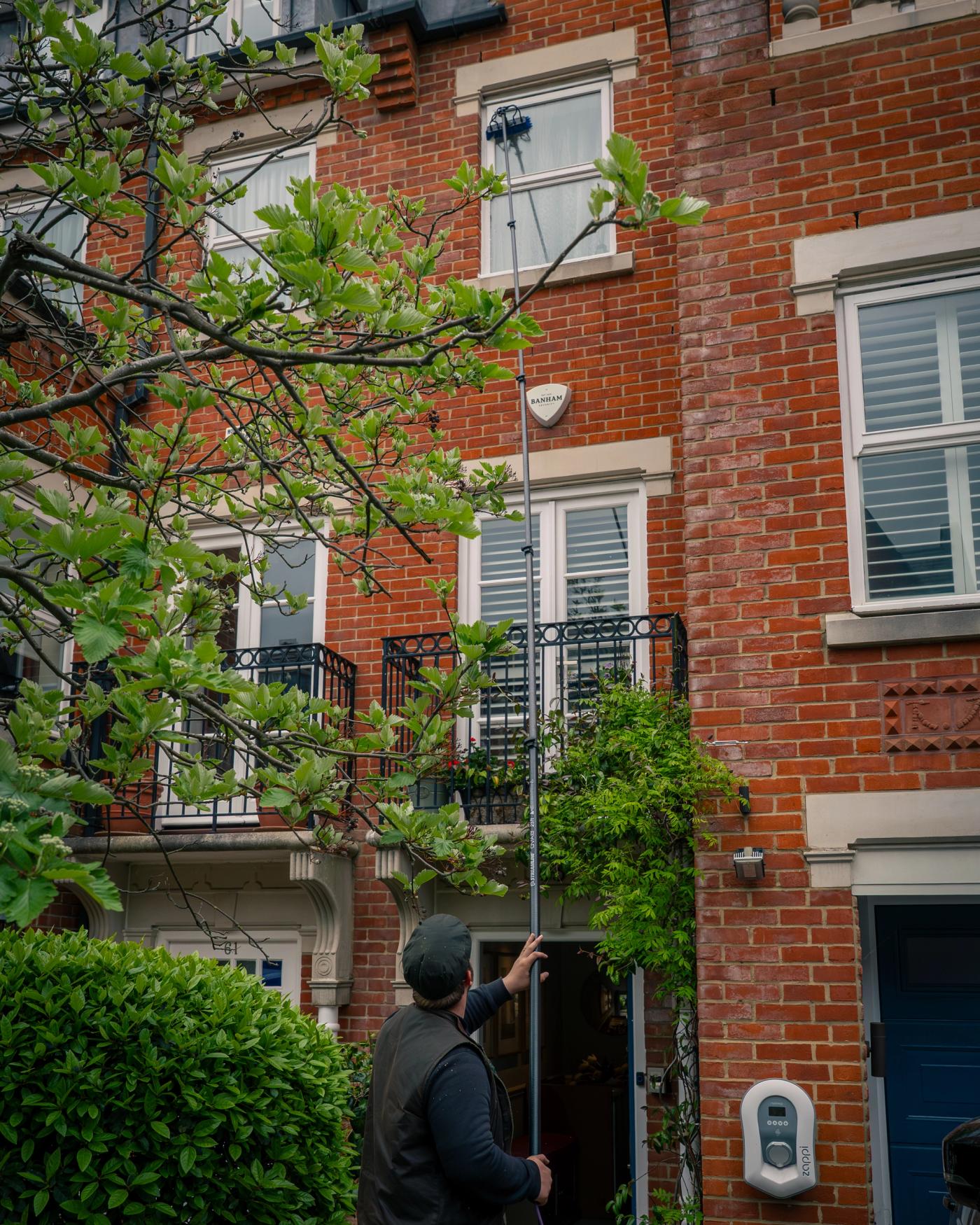
A clean frame changes the whole window
White uPVC rarely asks for attention until it has lost its brightness. Once it turns green, grey or yellow, even clean glass can seem less impressive. Understanding how to clean uPVC frames is really about understanding the full window, including the frame, sill and roofline around it. With professional care, uPVC can be restored to a clean, even white, helping the whole home look fresher, lighter and better maintained.
Common questions
How do you clean uPVC frames properly?
uPVC frames should be cleaned with suitable non-abrasive methods that remove dirt, algae and traffic film without scratching the surface. Professional cleaning is best for upper, stained or awkward areas.
Why has my white uPVC turned green?
Green staining is usually algae. It develops where moisture lingers, particularly on shaded frames, soffits, fascias and areas affected by overflowing gutters.
Can yellowed uPVC be restored?
Yellowing can often be improved, especially if it is caused by surface film, pollution or ingrained dirt. Very old or degraded uPVC may not look new again, but professional cleaning can restore a much cleaner, more even appearance.
Should gutters be cleared before cleaning fascias?
If gutters are overflowing or blocked, they should be cleared as part of the same maintenance plan. Otherwise dirty water may continue to run over the cleaned fascias and soffits.