A practical guide to refreshing a tired patio before summer, from careful jet washing to treating algae, shade and surrounding exterior details.
Knowing how to clean a patio properly can transform the way a garden feels before summer. A tired patio is rarely just dirty. It may be holding winter grime, algae, leaf tannins, barbecue marks, moss in the joints and damp staining from shaded corners. When cleaned with care, stone and paving regain their colour and texture, furniture sits more comfortably, and the whole garden begins to feel ready for long lunches, open doors and warmer evenings.
How to clean a patio without damaging the surface
The first rule is to match the cleaning method to the material. Natural stone, porcelain, concrete slabs and block paving all respond differently to pressure. Too little force may leave staining behind. Too much can scar the surface, disturb joints or create uneven patches.
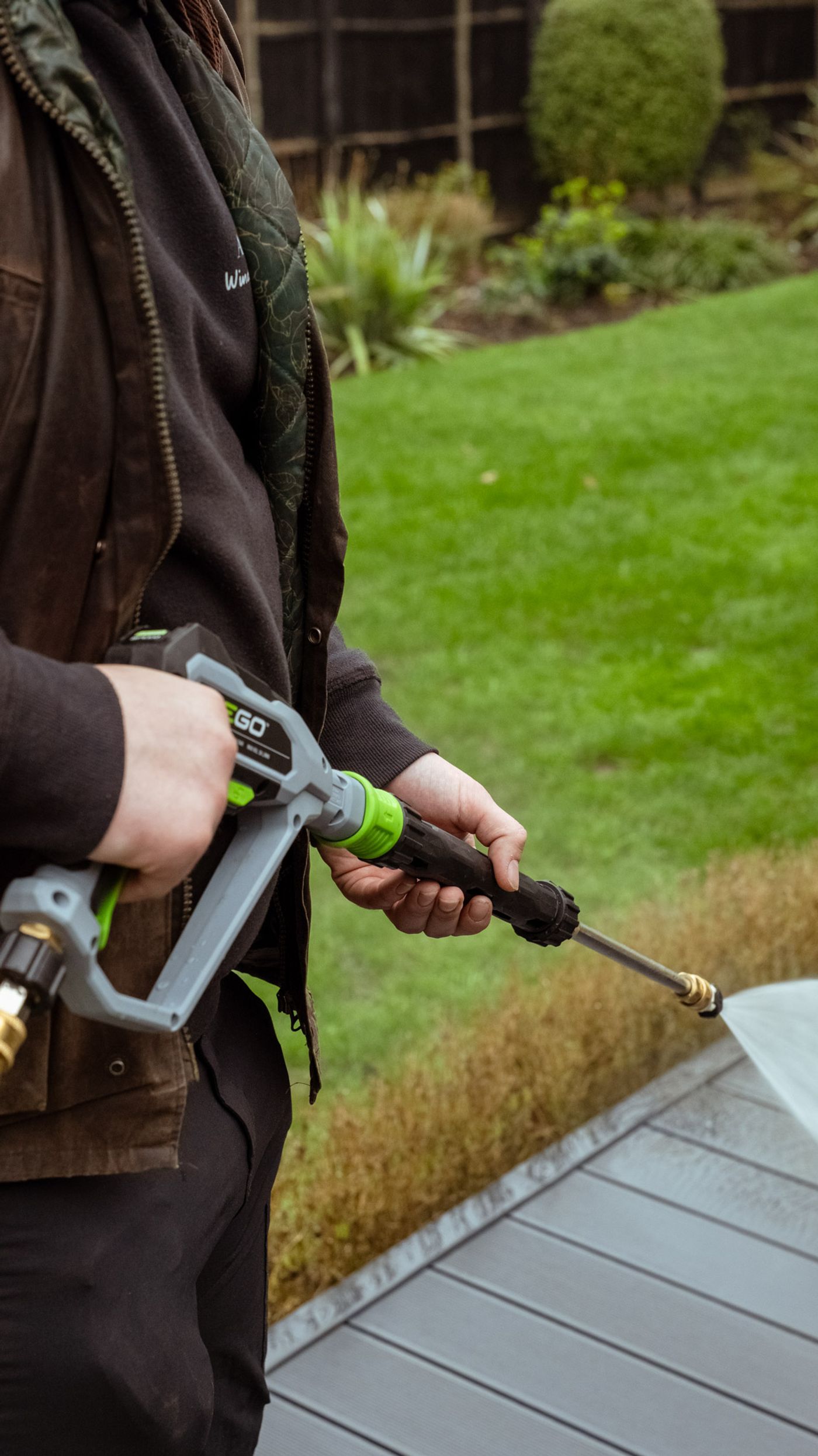
Professional jet washing is effective because it uses controlled pressure suited to the surface. The aim is to lift grime, algae and moss without stripping or damaging the paving. For block paving, fresh kiln-dried sand should be brushed back into the joints afterwards. This helps stabilise the blocks and restores the neat finish between them.
Before cleaning begins, the patio should be cleared of furniture, pots and loose debris. Drainage points should be checked, and any delicate planting nearby should be considered. A careful clean is planned, not rushed.
What makes patios look tired after winter?
Winter leaves several layers behind. Rain keeps surfaces damp, fallen leaves release tannins, and low light slows drying. Algae thrives in shaded sections, especially near walls, planters and overhanging shrubs. Moss can settle in joints, while everyday garden use adds soil, dust and organic matter.
Even good paving can look flat by spring. Colour becomes muted, edges look green, and the surface may feel slippery underfoot. This does not mean the patio is beyond recovery. It usually means it needs a proper seasonal clean.
London patios often gather urban dust and residue, particularly in enclosed gardens. Kent patios may see more leaf matter, pollen and moss from surrounding trees and lawns. Both benefit from the same principle: remove the build-up carefully, then treat any recurring growth at the source where needed.
Why patios become slippery
A slippery patio is usually caused by algae, moss or mildew forming a film on the surface. Shaded areas are most affected because they stay wet for longer. Steps, narrow side returns and areas beneath garden furniture can become particularly slick.
Jet washing removes this film from hard surfaces, improving both appearance and usability. Where organic growth returns quickly, soft washing may also be considered for adjacent walls, render or other softer surfaces that should not be pressure washed.
Is jet washing the best way to clean a patio?
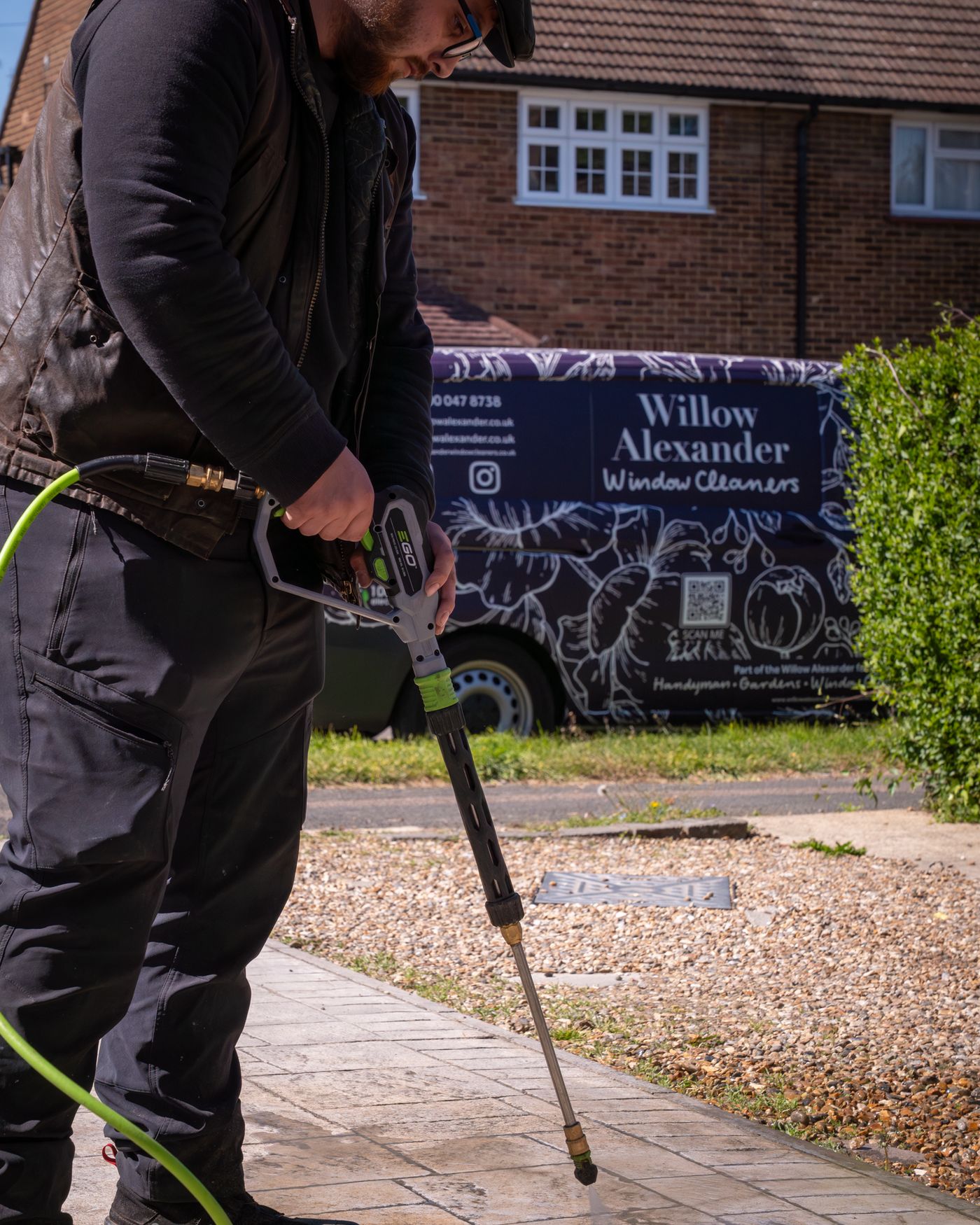
For many hard patio surfaces, jet washing is the most effective way to remove built-up grime. The key is control. A professional approach uses the right pressure and technique for the paving, rather than simply turning the machine up as high as possible.
Natural stone may need a gentler approach than concrete. Older slabs may have weathered edges that require care. Porcelain can usually be cleaned well, but grout and drainage details still matter. Block paving needs particular attention because pressure can remove jointing sand, which should be replaced afterwards with fresh kiln-dried sand.
A patio should look cleaner, brighter and more even after jet washing. It should not look etched, patchy or stripped.
Should you use soft washing on a patio?
Soft washing and jet washing serve different purposes. Jet washing is usually best for the hard patio surface itself, provided the pressure is correctly matched. Soft washing is more suitable for algae, lichen and mildew on render, painted masonry, softer stone and roofs, where low pressure and plant-safe biocides are needed.
However, patios often sit within a wider exterior setting. A shaded rendered wall next to the patio may be green with algae. A painted boundary wall may be mildewed. A soft stone feature may need a gentler method. In these cases, jet washing the patio and soft washing surrounding vertical surfaces can produce a more complete and longer-lasting refresh.
The right method depends on the surface. A thoughtful exterior clean does not use one tool for everything.
How to prepare your patio for professional cleaning
Good preparation helps the work go smoothly. Move furniture, planters and decorative items where possible. Sweep away loose leaves and note any areas of concern, such as loose slabs, cracked pointing or poor drainage. If pots have left circular marks, point these out so they can be treated with suitable care.
It is also useful to think about water movement. Patios should drain away from the house. If water tends to pool, cleaning may reveal areas where drainage needs attention. Persistent damp patches often explain recurring algae.
Pets should be kept indoors or away from the area while cleaning takes place. Windows and doors nearby should be closed, especially if the patio sits directly outside the kitchen or garden room.
What happens after block paving is jet washed?
Block paving needs a finishing step. Jet washing removes dirt and algae, but it can also remove some of the sand between the blocks. Once the area is clean and dry enough, fresh kiln-dried sand should be brushed back into the joints.
This is not just cosmetic. Jointing sand helps keep the paving stable and discourages movement. It also gives the surface a crisp, finished look. Willow Alexander brushes fresh kiln-dried sand back into block paving joints after jet washing, restoring the detail that makes the surface feel properly completed.
How often should a patio be cleaned?
Most patios benefit from a thorough clean once a year, often in spring or early summer. Shaded gardens, homes beneath trees or patios used heavily for entertaining may need attention more often. A lighter maintenance clean after autumn can also be helpful if leaf staining is a recurring issue.
The best timing depends on how you use the space. If the patio is central to summer living, clean it before furniture and pots are arranged for the season. If you host regularly, plan ahead rather than waiting until the week guests arrive.
A professional clean can make the space feel ready, but regular sweeping and leaf removal between visits will help preserve the result.
How patio cleaning improves the whole garden
A patio is the visual floor of an outdoor room. When it is dull or green, the garden can feel tired even if the planting is beautiful. Once the paving is cleaned, pots stand out more clearly, furniture looks better placed and the transition from house to garden feels more considered.
Clean paving also improves the view from inside. Through clear windows and open doors, the patio becomes part of the room beyond. This is why patio cleaning pairs so well with window cleaning. Bright glass and fresh stone together change the feeling of the whole rear elevation.
For homes with rendered walls, steps, paths or roofline staining, a broader exterior clean can be even more effective. The goal is not just one clean surface, but a garden setting that feels cared for from every angle.
A summer-ready space starts underfoot
A tired patio can make the garden feel closed before the season has even begun. With the right jet washing method, surface-matched pressure and proper finishing details, it can be revived without harsh treatment. Clean paving brings back colour, improves grip and gives outdoor furniture a better setting. Most importantly, it makes the garden feel ready to be used, which is what summer exterior care is really for.
Common questions
How do you clean a patio properly?
A patio should be cleared, swept and jet washed with pressure matched to the surface. Natural stone, porcelain, concrete and block paving all need slightly different care.
Is jet washing safe for patios?
Jet washing is safe for many hard patio surfaces when carried out with the correct pressure and technique. Too much force can damage paving or disturb joints, so a professional approach matters.
Do block paving joints need sanding after jet washing?
Yes. Fresh kiln-dried sand should be brushed back into block paving joints after cleaning. This helps stabilise the blocks and restores a neat finish.
When is the best time to clean a patio?
Spring or early summer is ideal if you want the patio ready for outdoor living. Shaded or tree-covered patios may also benefit from attention after autumn leaf fall.