Commercial window cleaning frequency depends on location, footfall, frontage, season and brand presentation. Here is how to choose the right rhythm.
How often should commercial windows be cleaned? The answer depends on what the premises does, where it sits and how visible the glass is to clients, customers, tenants or visitors. A shopfront on a busy road may need a tighter rhythm than a quiet office set back from the street. A managed period property may need a careful schedule that protects presentation without disrupting occupants. Commercial window cleaning is about clarity, consistency and the impression a building gives before anyone steps inside.
How often should commercial windows be cleaned for good presentation?
Commercial windows should be cleaned often enough that the glass never becomes a distraction. For retail and hospitality frontage, that may mean a frequent routine because fingerprints, traffic film, weather marks and street dust are visible quickly. Offices, managed buildings and commercial upper floors may suit a more measured schedule, depending on exposure and expectations.
The right rhythm is shaped by several factors:
- Footfall and customer contact with the glass
- Location near traffic, trees or building works
- Size and height of the glazing
- Whether the premises faces a main road
- Season, weather and pollen
- Brand or tenant expectations
- Whether gutters or roofline issues are marking the windows
For commercial settings, consistency matters. Clean glass supports trust, order and care.
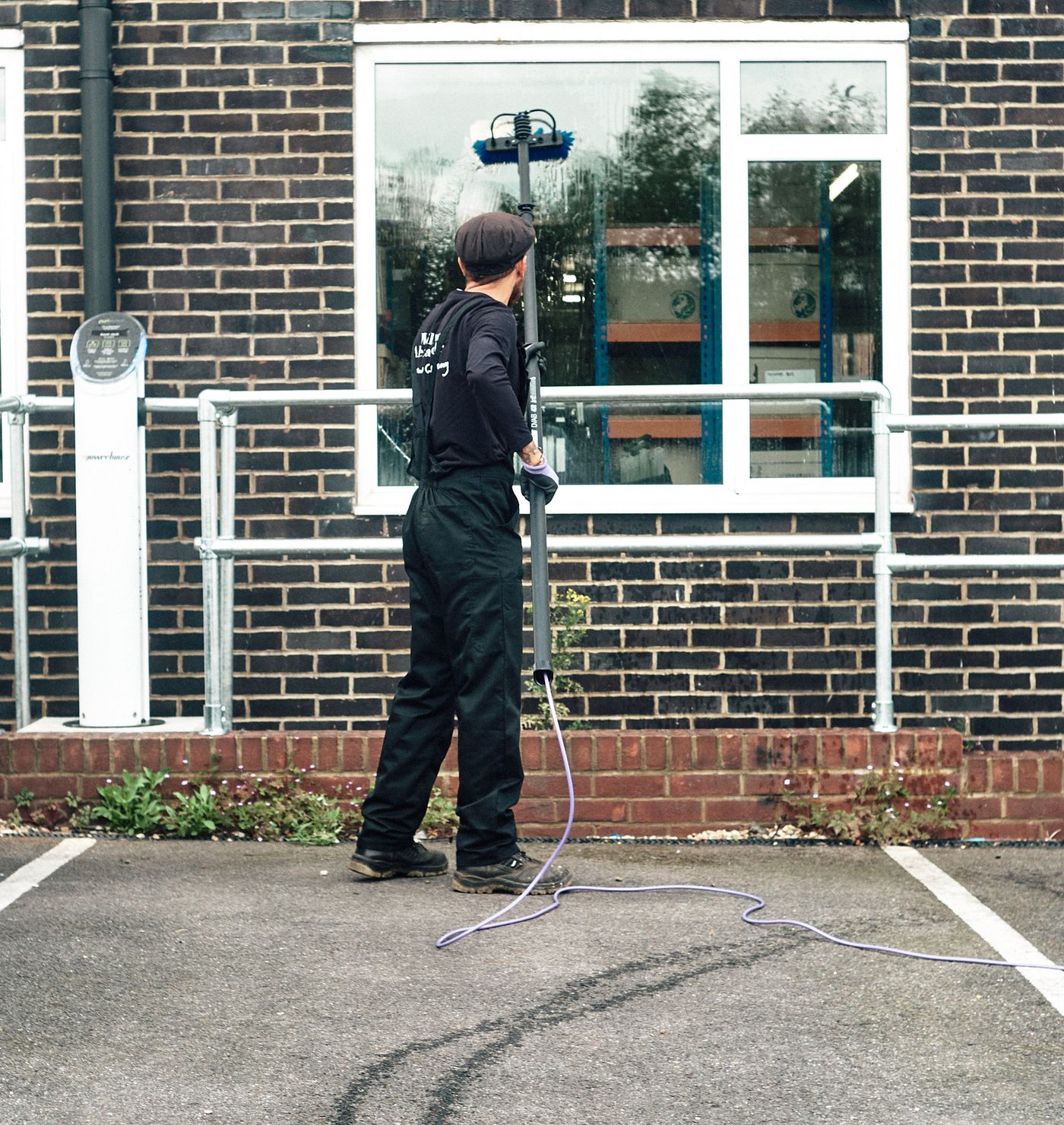
Why commercial windows get dirty faster
Commercial windows often sit closer to public activity. People touch doors and lower glass. Deliveries create dust. Traffic leaves film. Weather splashes residue from pavements. In busy London areas, frontages can dull quickly even when the premises is otherwise well maintained.
Upper office windows may not have fingerprints, but they gather airborne pollution, rain residue and dust. Managed properties may show dirt around communal entrances, stairwell glazing and shared doors. Period commercial buildings may also have detailed frames and sills that collect grime.
In Kent, commercial premises may face more pollen, leaf debris and garden or courtyard exposure, especially where buildings sit near trees or landscaped areas.
Why streak-free cleaning matters commercially
Commercial glass is often viewed from outside at close range. Streaks, cloudy patches and mineral marks are noticeable. Willow Alexander uses a pure water, deionised pole system from the ground, leaving a spotless, streak-free finish with no chemicals. The water dries clear, leaves no mineral deposits and is purer than rainwater, so light rain should not spoil a fresh clean.
This is particularly useful for repeat maintenance, because there is no detergent film left behind to attract fresh dust.
Choosing a schedule by business type
A shopfront may need cleaning more often than an office because the glass is part of the selling environment. Fingerprints, street spray and window displays make marks more obvious. Restaurants, cafes and customer-facing premises often benefit from a rhythm that keeps entrances and frontage fresh.
Offices may need a schedule based on visibility and tenant expectations. Ground-floor glass, reception areas and meeting room frontage may need more regular care than upper windows. Managed properties may require a planned programme that fits around residents, tenants or building managers.
Period properties need particular care. The goal is to maintain the appearance without treating historic materials harshly. A professional team should understand access, frames, sills and the wider exterior.
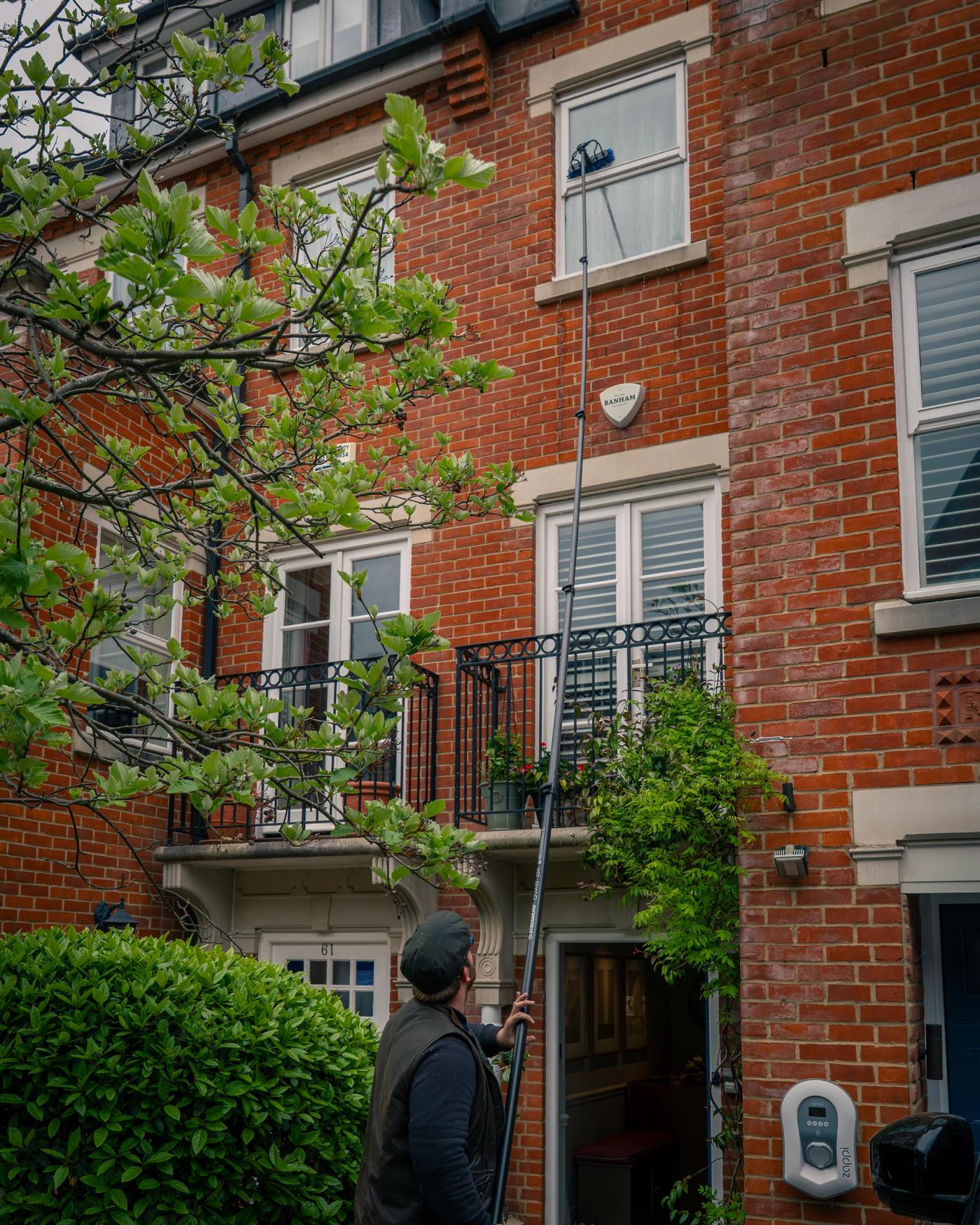
What about gutters on commercial premises?
Commercial window cleaning should not ignore roofline issues. Blocked gutters can spill dirty water onto glass, frames, brickwork and signage. If the windows are cleaned but gutters continue to overflow, marks may return quickly.
Willow Alexander clears gutters ladder-free using a high-suction SkyVac system from the ground, fully insured, clearing the whole run in one pass. For offices, shopfronts and managed properties, this can help protect the facade as well as the glass.
Gutter clearing is especially relevant where roof moss, leaves or debris are visible, where staining appears below the roofline, or where rainwater spills during bad weather.
How seasons affect commercial window cleaning
Spring brings pollen, dust and brighter light that reveals marks. Summer increases footfall, open doors and visibility. Autumn brings leaves, rain and gutter debris. Winter adds road spray, damp and low sunlight that can show smears.
A commercial cleaning schedule should flex with these conditions. A shopfront may need more attention during busy seasons. Offices may need a seasonal review after building works nearby or after heavy weather. Managed buildings may benefit from pairing window cleaning with gutter checks before wet months.
The schedule should be practical rather than rigid. If the glass is central to the premises, it should be maintained before it looks neglected.
Why accreditation and insurance matter
Commercial clients need more than a good finish. They need confidence that the contractor is professional, insured and able to work around the property responsibly. Willow Alexander is accredited by the Federation of Window Cleaners and fully insured with public liability cover.
This matters for building managers, landlords, retail operators and office teams. Window cleaning may take place around customers, staff, vehicles and public areas. Insurance, accreditation and a clear method help reduce uncertainty.
A professional team should also communicate clearly about access, frequency, scope and any related exterior issues.
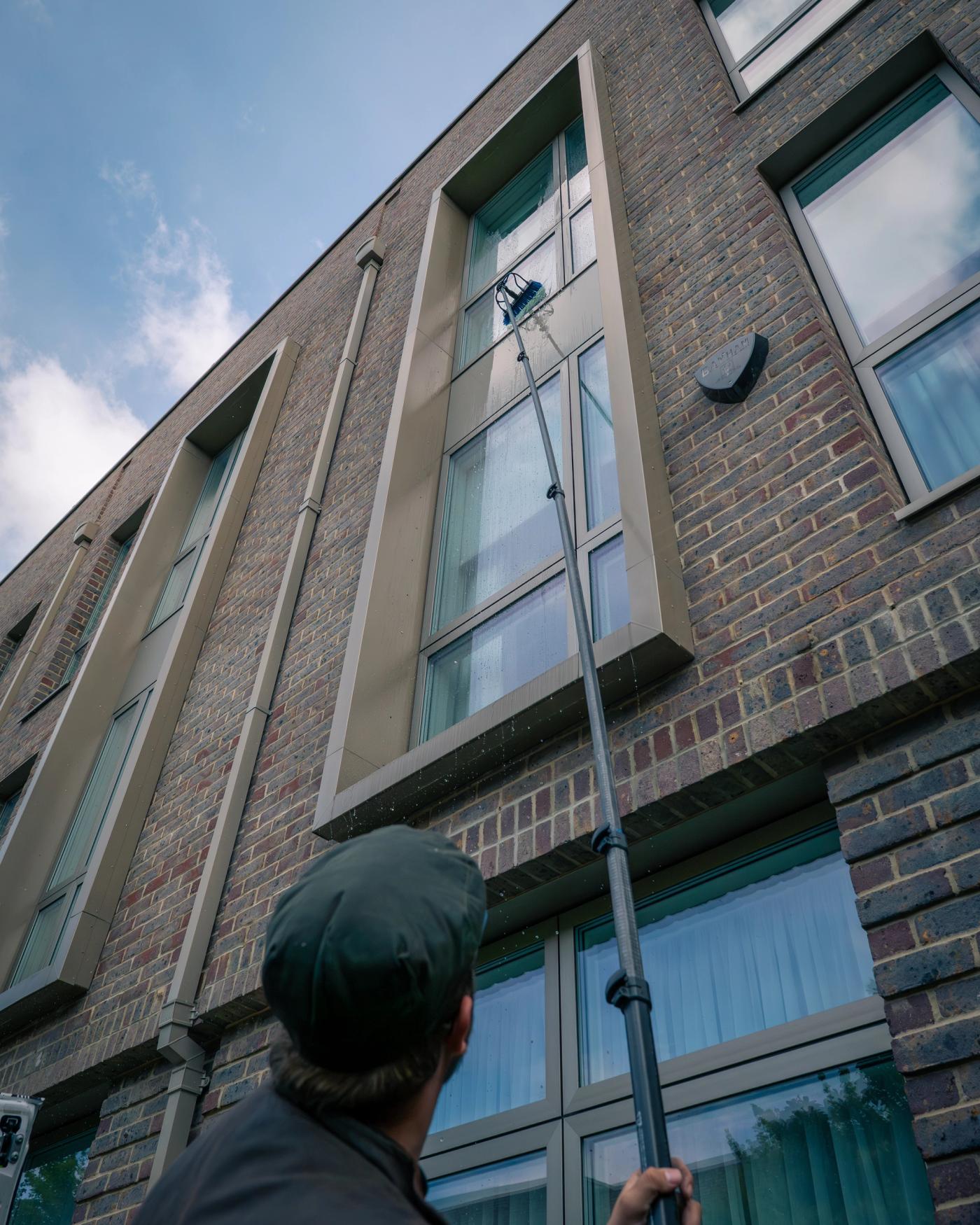
Environmental considerations for commercial premises
Many businesses are increasingly attentive to how their premises are maintained. Willow Alexander is Carbon Neutral since 2023 and runs a fully electric fleet. The pure water window cleaning method uses no chemicals and leaves no mineral deposits.
For commercial clients, these details can support broader responsibility goals without requiring compromise on presentation. A clear window, a low impact method and a fully electric route can sit comfortably together.
This is particularly relevant for managed properties and client-facing premises where maintenance choices are part of the building's overall character.
How to tell your schedule is not frequent enough
If glass looks dull before the next visit, if customers leave fingerprints on doors, if sunlight reveals smears, or if rain marks appear repeatedly in the same areas, the schedule may need adjusting. If lower frontage looks tired while upper windows remain acceptable, you may need different frequencies for different parts of the building.
A good commercial plan can be layered. Entrances and shopfronts may be cleaned more often, while upper windows follow a different cycle. Gutters, frames and exterior details may be checked seasonally.
The aim is to keep the premises consistently presentable, not to wait until the dirt is obvious.
A clear frontage is part of the business
Commercial windows carry a building's first impression. They shape how customers see a shop, how tenants feel about a managed property and how visitors judge an office. The right cleaning frequency depends on exposure, use and expectation, but the principle is simple: glass should be clear before it becomes a problem. With pure water cleaning, professional insurance, accreditation and related gutter care, commercial premises can keep a polished, well-managed appearance throughout the year.
Common questions
How often should commercial windows be cleaned?
It depends on location, footfall, traffic exposure and the type of premises. Shopfronts and entrances often need more frequent cleaning than upper office windows.
Do offices need professional window cleaning?
Yes. Office windows gather dust, rain residue and pollution, and clean glass helps maintain a professional appearance for staff, clients and visitors.
Can commercial windows be cleaned from the ground?
Many commercial windows can be cleaned using a pure water pole system from the ground, depending on height, access and building layout.
Should gutters be checked on commercial buildings?
Yes. Blocked gutters can overflow and mark windows, frames, signage and exterior walls, so gutter clearing should be part of wider exterior maintenance.