Streak-free windows depend on water quality, timing, technique and clean frames. Learn how to avoid smears and keep glass clear for longer.
Knowing how to clean windows without streaks is one of those domestic skills that looks simple until the sun catches the glass. A pane can seem clean from inside, then show smears, cloth marks, cloudy patches or dried spots as soon as the light changes. Streak-free windows depend on more than effort. Water quality, timing, tools, residue, frames and drying all make a difference. For homes where clarity matters, the best results come from method rather than force.
How to clean windows without streaks at home
To clean windows without streaks, begin by removing loose dust and dirt before introducing moisture. If grit and residue are dragged across the glass, they can create smears and may even scratch the surface. Work on a mild, dry day where possible. Strong sun can dry water or cleaning product too quickly, leaving marks before you have finished.
Use clean tools. Dirty cloths, old sponges and product-heavy sprays are common causes of streaking. Too much cleaning solution can be as troublesome as too little, because residue remains on the glass and attracts fresh dust. Wipe edges and corners carefully, as leftover moisture often dries into visible lines.
For lower interior panes, a measured hand clean can work well. For exterior windows, upper floors and large glass areas, professional pure water cleaning is usually more consistent.
Why windows streak after cleaning
Streaks usually come from residue. This may be detergent left on the glass, minerals from ordinary tap water, dirt moved rather than removed, or fibres from a cloth. The marks are not always visible immediately. They often appear when the glass dries or when sunlight hits from a particular angle.
Tap water is a common reason for spotting. It contains minerals that can remain on the surface as the water evaporates. If the window is rinsed with tap water and left to dry, small deposits can remain. Detergents can also leave film, particularly if too much is used or if the glass is not rinsed thoroughly.
Frames and sills matter too. If they are dirty, rain can wash residue back onto the pane. A streak-free clean should consider the whole window opening, not only the central glass.
Why pure water cleaning gives a clearer finish
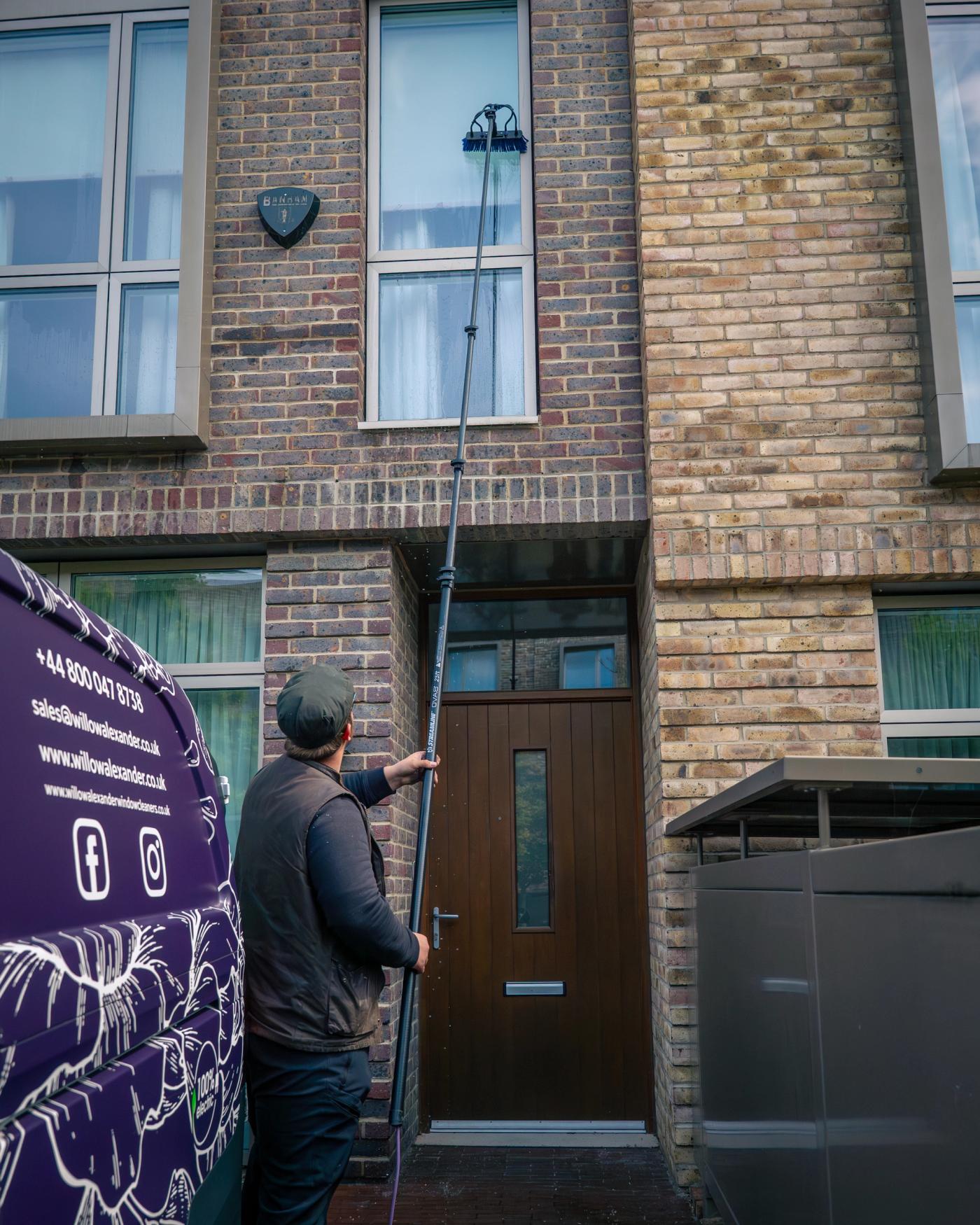
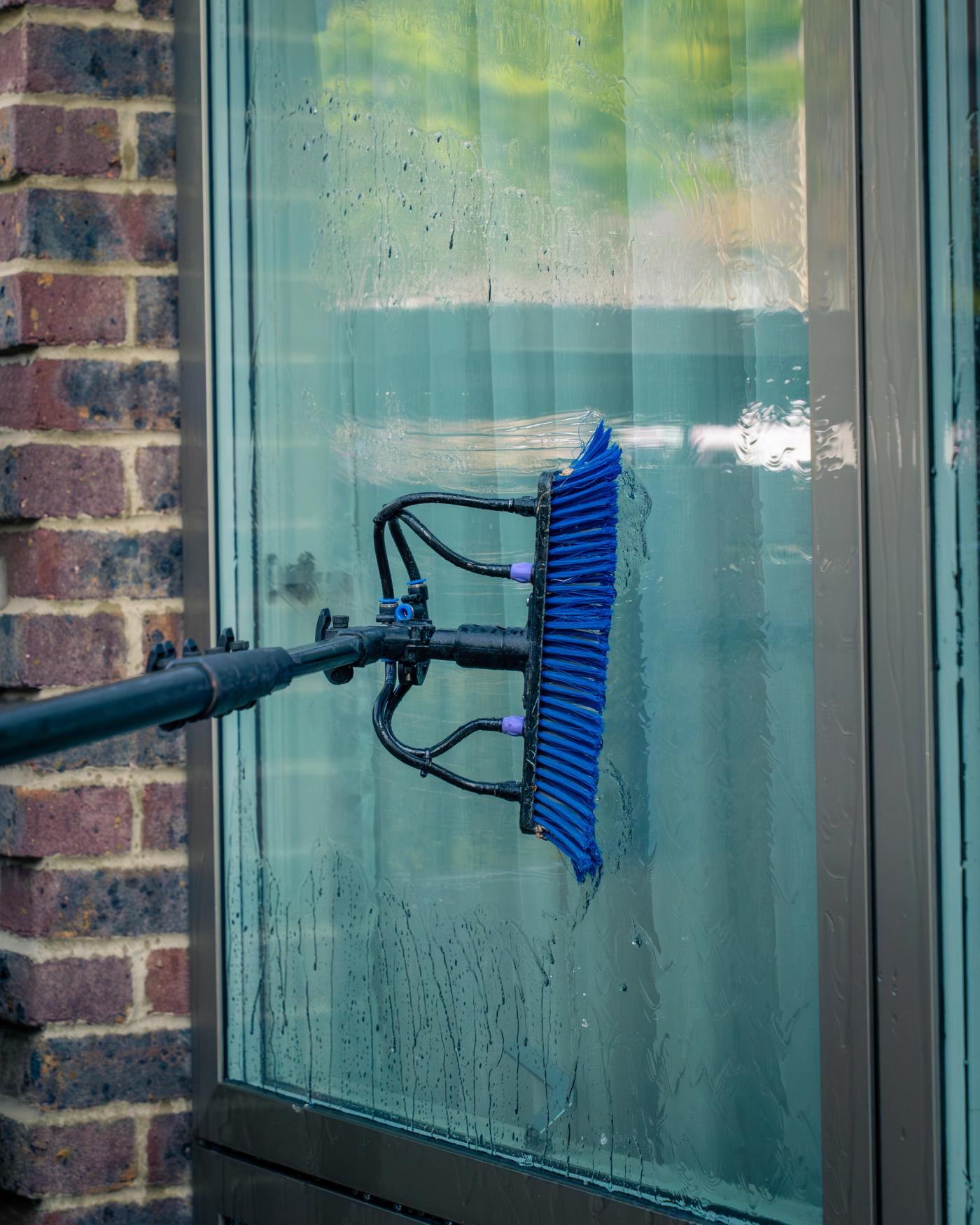
Willow Alexander uses a pure water, deionised pole system from the ground. The water has had minerals removed, so it dries clear and leaves no mineral deposits. It also cleans without chemicals, which means there is no detergent film left behind.
The pole system allows the brush to loosen dirt from the glass, frames and sills, before the pure water rinses everything away. The glass is then left to dry naturally. Because the water is purer than rainwater, light rain should not spoil a fresh clean.
This is why professional pure water cleaning is especially suitable for regular exterior maintenance.
The role of frames, sills and uPVC
Many streaks begin around the edges. Dirt sits on the frame, ledge or sill, then runs down when rain falls or the window is rinsed. This is particularly visible on white uPVC, where grey film, green algae or yellowing can make the glass look less clean even after the pane has been treated.
A good exterior clean should include frames and sills. When these are kept fresh, there is less residue to wash back onto the glass. Willow Alexander also restores uPVC frames, soffits and fascias to a clean, even white, which helps the whole window area look brighter and more consistent.
If your windows look streaky soon after cleaning, inspect the surrounding frame. The issue may be coming from the edges rather than the glass itself.
How weather affects streaks
Weather changes the result. Strong sun can make water dry too quickly. Wind can blow dust onto wet glass. Heavy rain can splash dirt from surrounding surfaces. Light rain after a pure water clean should not be a problem, but dirty run-off from gutters, walls or frames can still mark the glass.
The best time for domestic glass cleaning is often a mild, still day. For professional pure water cleaning, the method is designed to work across normal conditions, because the glass is rinsed with water that dries clear. However, the surrounding exterior still matters. Blocked gutters, dusty building work or water dripping from mineral-rich sources can all affect results.
What about hard water spots?
Hard water spots are different from ordinary streaks. They are mineral deposits left after hard water dries on glass. Pure water cleaning helps prevent new mineral spotting, but existing hard-water staining may need assessment. Severe, etched staining may not be fully removable.
If you see chalky spots that do not move with normal cleaning, do not scrub aggressively. The glass should be assessed carefully to avoid damage.
Common mistakes that cause streaks
The most common mistake is using too much product. More spray does not mean cleaner glass. It often means more residue. Another mistake is cleaning in direct sun, which dries the surface before the product can be removed. Reusing dirty cloths also creates smears, especially if they hold detergent or fabric softener residue.
Ignoring frames and sills is another issue. The pane may be cleaned, but the surrounding dirt remains. Once it rains, marks return. Finally, ordinary tap water can leave mineral spots if it is allowed to dry on exterior glass.
Avoid these habits and the finish improves immediately.
When to call a professional
Call a professional when windows are high, large, awkward, repeatedly streaky or affected by mineral spotting. Professional cleaning is also sensible for conservatories, rooflights, commercial frontage and homes where presentation matters consistently.
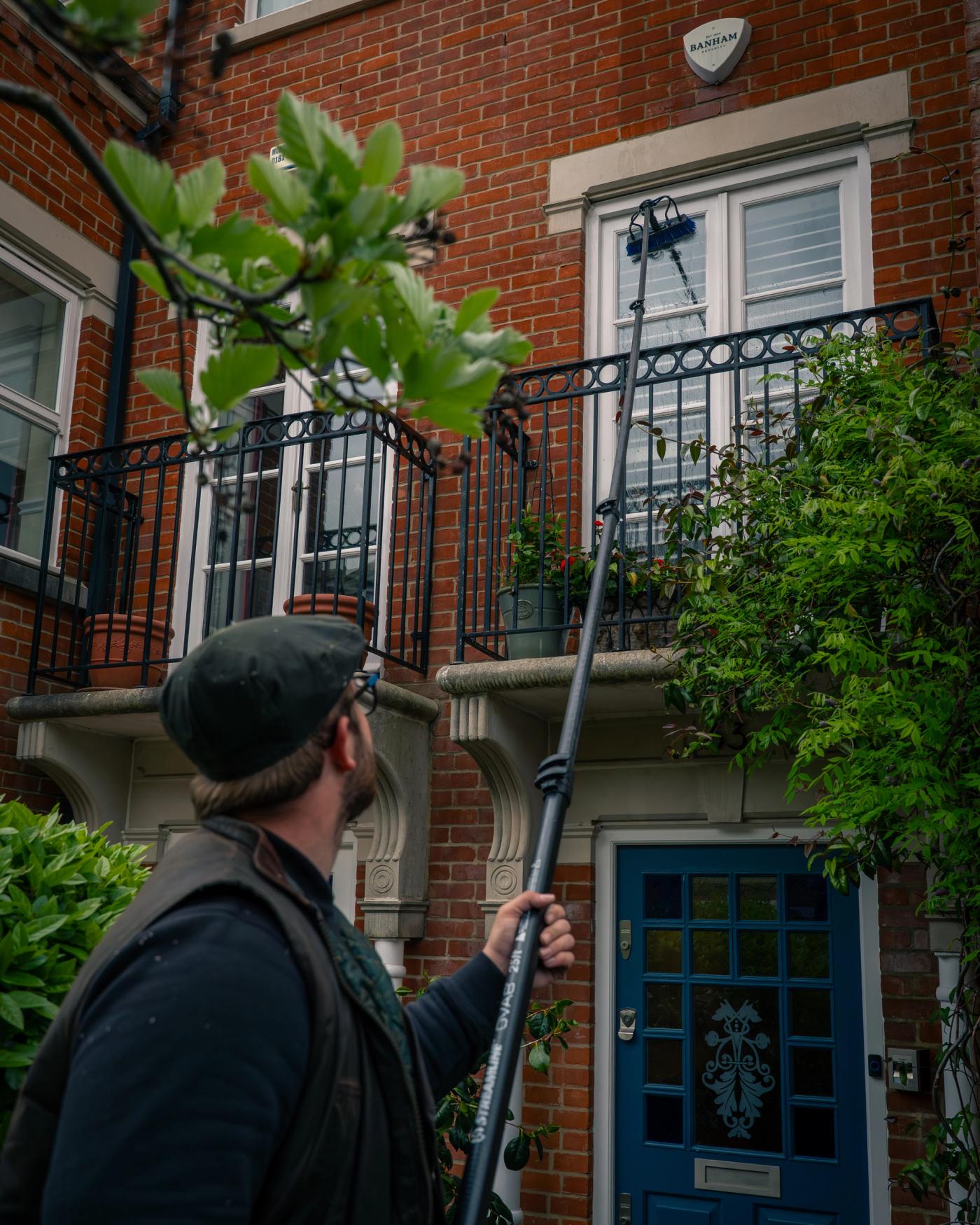
The pure water pole system is particularly helpful because it reaches upper windows from the ground in many cases. It cleans without chemicals and avoids the residue that often causes streaks. For homes across London and Kent, it is a calm, reliable way to keep glass clear through the year.
A cleaner finish begins with the right method
Streak-free windows are not achieved by polishing harder. They come from removing dirt properly, avoiding residue, using the right water and keeping frames and sills clean. For a home that needs to look bright and well cared for, pure water window cleaning offers a dependable answer. It leaves the glass clear, the frames fresher and the view less interrupted by smears, spots or cloudy edges.
Common questions
Why do my windows look streaky after cleaning?
Streaks are usually caused by detergent residue, minerals in tap water, dirty cloths, fast drying in strong sun, or dirt from frames and sills washing back onto the glass.
How do professionals clean windows without streaks?
Willow Alexander uses a pure water, deionised pole system from the ground. The water dries clear, leaves no mineral deposits and cleans without chemicals.
Does rain make clean windows streaky?
Light rain should not spoil windows cleaned with pure water. Rain usually marks glass when it moves existing dirt or residue around.
Can dirty frames cause streaks on glass?
Yes. Dirt on frames and sills can wash down onto the glass after rain. Cleaning the whole window opening helps preserve a clearer finish.