Decking needs careful cleaning to avoid splintering, stripping or making the surface patchy. Learn when jet washing or soft washing is suitable.
Knowing how to clean decking safely is important because decking can become slippery, grey and tired long before it needs replacing. Shade, rain, algae, garden debris, food spills and foot traffic all leave their mark. Yet decking is not the same as stone paving. Too much pressure can scar timber, disturb fibres or leave an uneven finish. The safest approach is to identify the material, understand the staining and match the cleaning method to the surface.
How to clean decking without damaging the surface
To clean decking safely, begin by clearing furniture, pots, leaves and loose debris. Sweep thoroughly so grit is not dragged across the boards. Then assess the surface. Timber decking, composite decking and coated boards all respond differently to cleaning. Older timber may be softer and more vulnerable to pressure. Composite boards may have manufacturer guidance that should be respected.
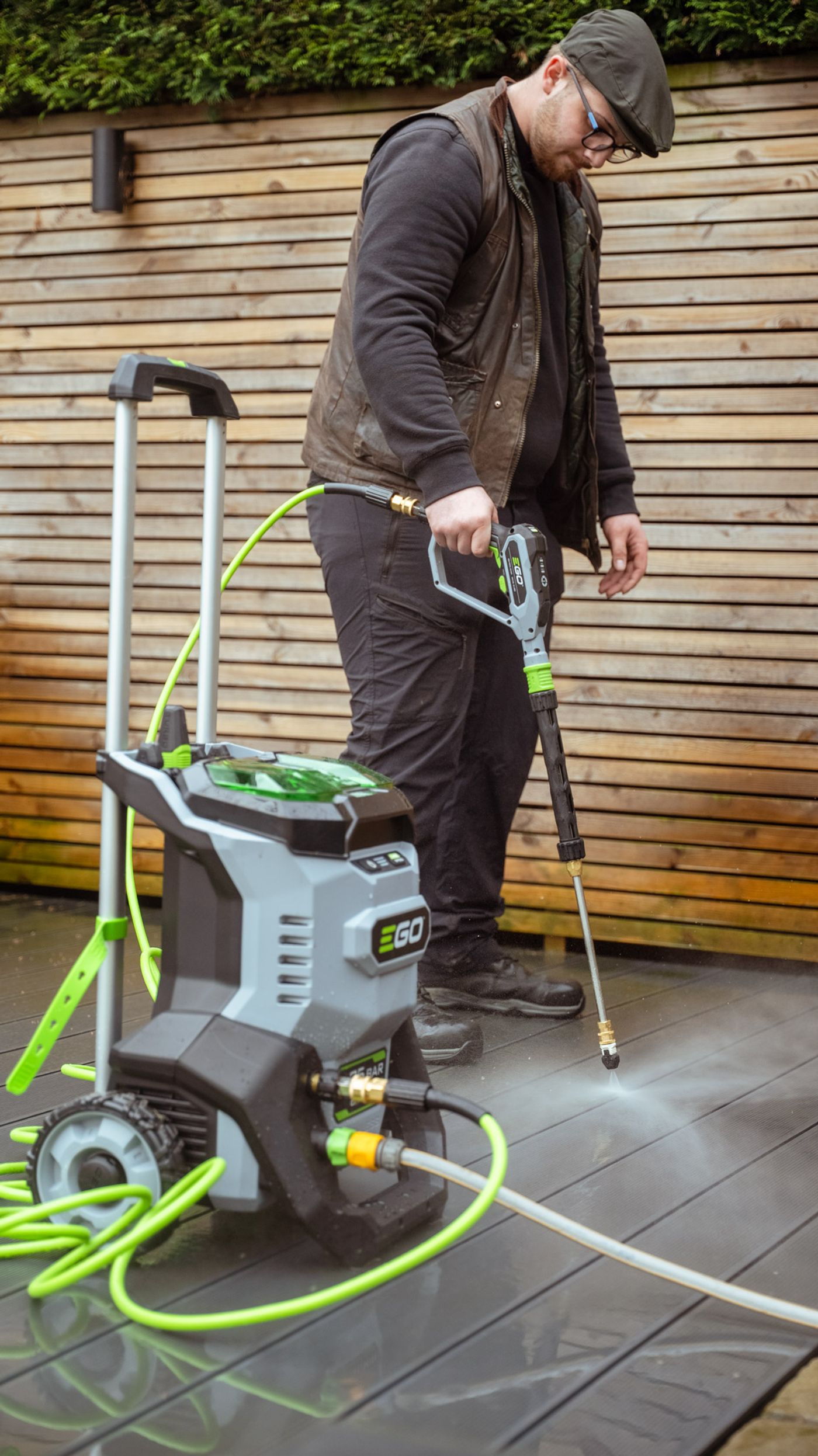
Jet washing can be used on suitable decking, but the pressure must be matched to the surface. The aim is to lift dirt and algae, not carve lines into the boards. On softer or more delicate surfaces, a gentler approach may be needed. Where algae, lichen or mildew is the main issue, low-pressure soft washing may help treat growth at the source.
A safe clean is one that improves grip and appearance without stripping the character of the deck.
Why decking becomes slippery
Decking becomes slippery when algae, mildew and organic matter form a film across the surface. This often happens in shaded gardens, beneath trees, around planters or where water drains slowly. Leaves and pollen add nutrients, while damp weather encourages growth.
The slipperiness is not always obvious in dry weather. It may become noticeable after rain, early in the morning or in winter when the deck stays damp for longer. Steps and narrow routes are especially important because a slippery surface can become hazardous.
Cleaning removes the film and restores a more usable surface. If algae returns quickly, the deck may need a treatment-led approach rather than pressure alone.
Timber versus composite decking
Timber decking has natural fibres that can be damaged by excessive force. If pressure is too high or the nozzle is held too close, the surface can splinter, fur or become striped. Composite decking is generally more uniform, but it can still mark if cleaned incorrectly.
Both materials need a measured approach. Start with the least aggressive method that will achieve the result. Avoid harsh scrubbing, unsuitable chemicals and uncontrolled pressure.
When jet washing is suitable for decking
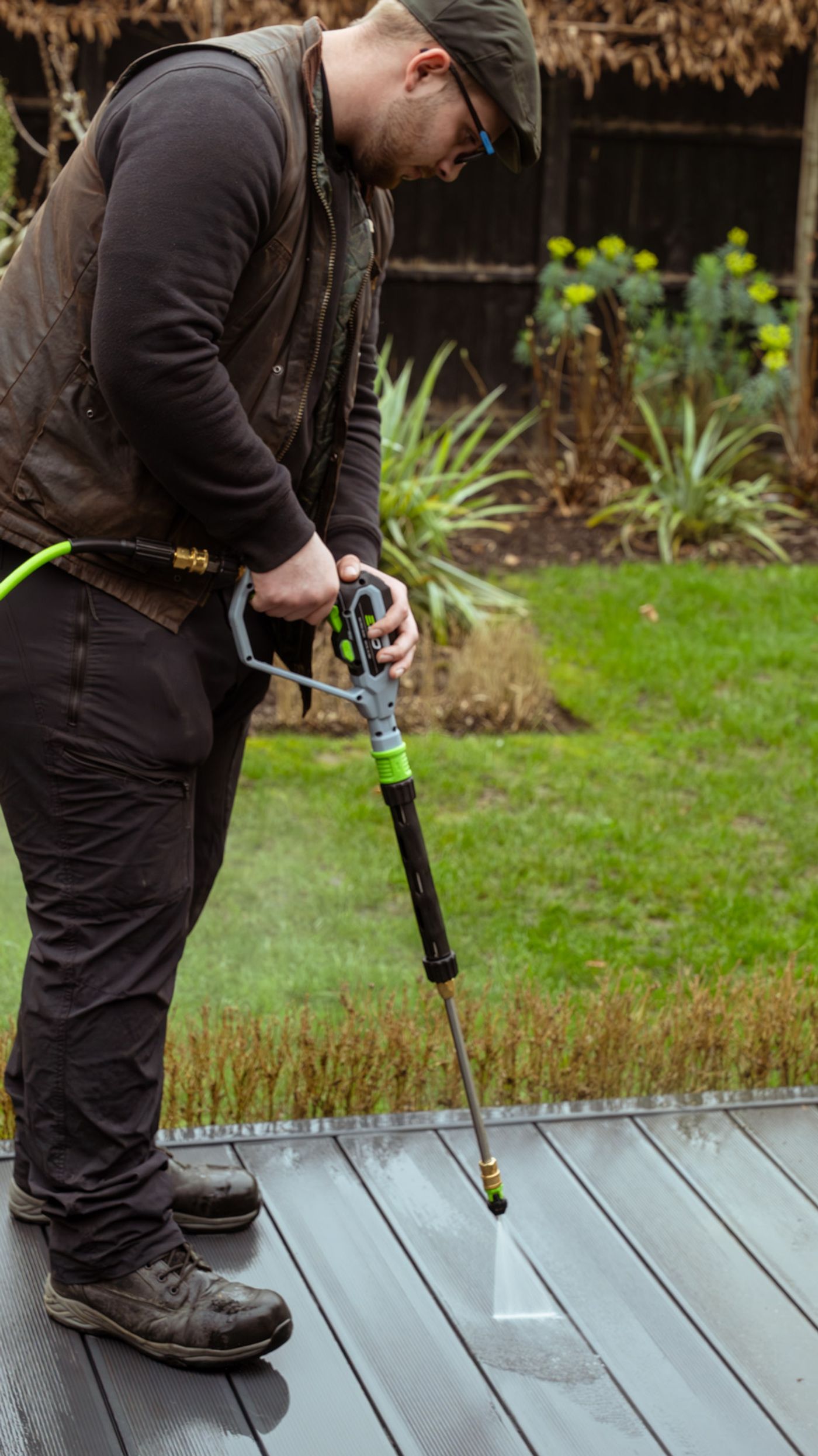
Jet washing is suitable for some decking when the surface is sound and the pressure is carefully controlled. It can remove dirt, algae and weathered residue effectively, particularly on robust boards. The technique matters. Even passes, suitable distance and surface awareness all help prevent lines or patchiness.
Professional cleaning is useful because the operator can judge how the surface is responding. If the boards begin to lift fibres or mark, the method can be adjusted. This is better than assuming more pressure will produce a better result.
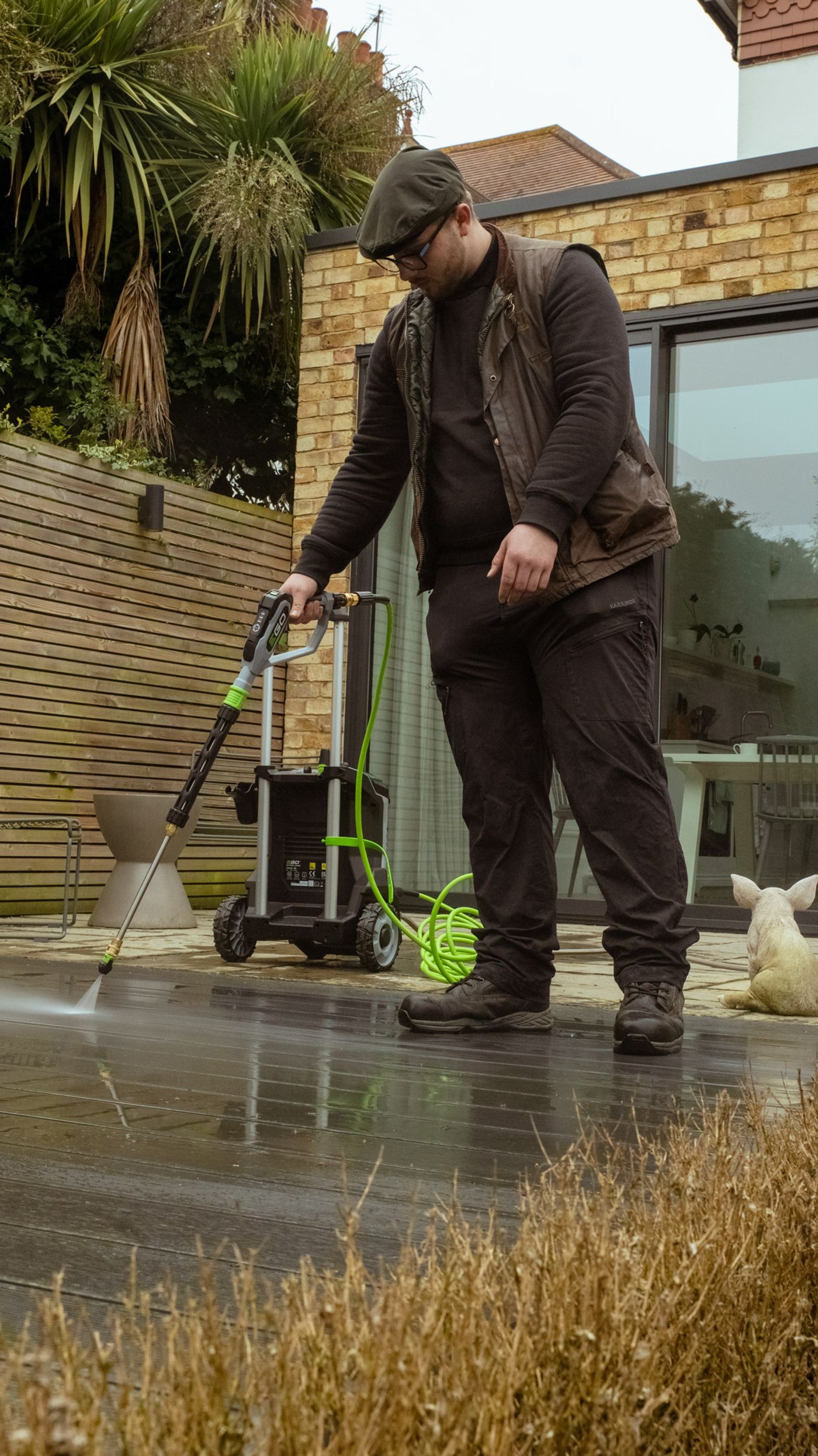
Jet washing is also useful for surrounding hard areas, such as paths, patios and steps. Cleaning these at the same time can reduce the amount of dirt and algae being walked back onto the decking.
When soft washing is the better approach
Soft washing may be more suitable when algae, lichen or mildew is the main problem and the surface needs gentler treatment. Willow Alexander uses low pressure and plant-safe biocides to lift organic growth at the source on suitable surfaces. This can help growth stay away for longer than pressure washing alone.
On decking, suitability depends on the material and condition. A professional assessment is important because timber, composite and coated boards should not all be treated in the same way. Nearby planting, drainage and run-off also need consideration.
Soft washing is not about making the surface wet and hoping for the best. It is a controlled method that uses low pressure and appropriate treatment to deal with biological growth.
What to do before decking is cleaned
Preparation makes the clean more effective. Remove furniture, plant pots, outdoor rugs, lanterns and storage boxes. Sweep the deck, clearing leaves from gaps between boards where possible. Note any loose boards, raised screws, rot, flaking coatings or damaged edges.
If the decking has been recently treated, stained or sealed, mention this before cleaning. Some finishes need specific care. If the boards are very old or fragile, a professional may recommend a gentler method or advise that cleaning expectations should be realistic.
Good preparation prevents damage and allows the cleaning team to see the true condition of the surface.
How to reduce algae returning
Decking stays cleaner when moisture is managed. Trim back planting that prevents airflow. Move pots occasionally so moisture does not sit beneath them. Sweep leaves regularly, especially in autumn. Avoid leaving outdoor rugs in place through damp weather unless they are designed for it.
Check drainage too. If water pools on the deck or runs towards one corner, that area will green more quickly. Cleaning helps, but the underlying damp pattern will still influence how soon algae returns.
A regular seasonal clean is often easier than waiting until the deck becomes heavily slippery or discoloured.
How decking fits into wider garden cleaning
Decking rarely exists alone. It may connect to patios, paths, garden rooms, conservatories or rendered walls. If those areas are green or dirty, they can affect the deck. Wet leaves blow across. Mud is walked from paths. Algae spreads from shaded corners.
A more complete exterior clean might include decking, paths, suitable patios, nearby cladding, conservatory glass or soft washing on walls affected by algae. Each surface should still receive the right method. The deck may need controlled jet washing, while the wall beside it may need soft washing.
This creates a garden that feels cared for as a whole, not cleaned in isolated patches.
A safer way to bring decking back
Decking can be revived, but it needs restraint. The wrong pressure or product can leave damage that is more noticeable than the dirt. By assessing the material, using surface-matched jet washing where suitable and soft washing where organic growth needs treatment, the deck can become cleaner, safer underfoot and more inviting. A thoughtful clean restores the space without asking the boards to withstand more than they should.
Common questions
How do you clean decking safely?
Clear the area, sweep away debris, assess the material and use a method suited to the surface. Suitable decking can be jet washed with controlled pressure, while some algae issues may need soft washing.
Can jet washing damage decking?
Yes. Too much pressure can scar timber, lift fibres or leave visible stripes. Pressure should be matched carefully to the decking material and condition.
Why does decking get slippery?
Decking becomes slippery when algae, mildew and organic matter form a film on the surface. Shade, moisture and leaves make this more likely.
Is soft washing suitable for decking?
Soft washing may be suitable where algae, lichen or mildew is the main issue, but the decking material and condition should be assessed first.