Conservatory roofs need careful cleaning, not harsh pressure. Learn how glass, frames and roof algae should be treated safely and effectively.
Knowing how to clean a conservatory roof safely matters because conservatories gather light, weather and garden debris in equal measure. Roof panels show algae, dust, bird mess, leaf stains and mineral marks more readily than vertical glass. Yet they are also awkward to reach and easy to damage with the wrong approach. A conservatory roof should be cleaned with care, matching the method to the surface, whether that means pure water for glass and frames or low-pressure soft washing for algae on roof surfaces.
How to clean a conservatory roof without causing damage
The safest way to clean a conservatory roof is to avoid standing on it, avoid harsh pressure and use a method suited to the material. Conservatory roofs may be glass, polycarbonate, tiled or a combination of surfaces. Each needs a different approach.
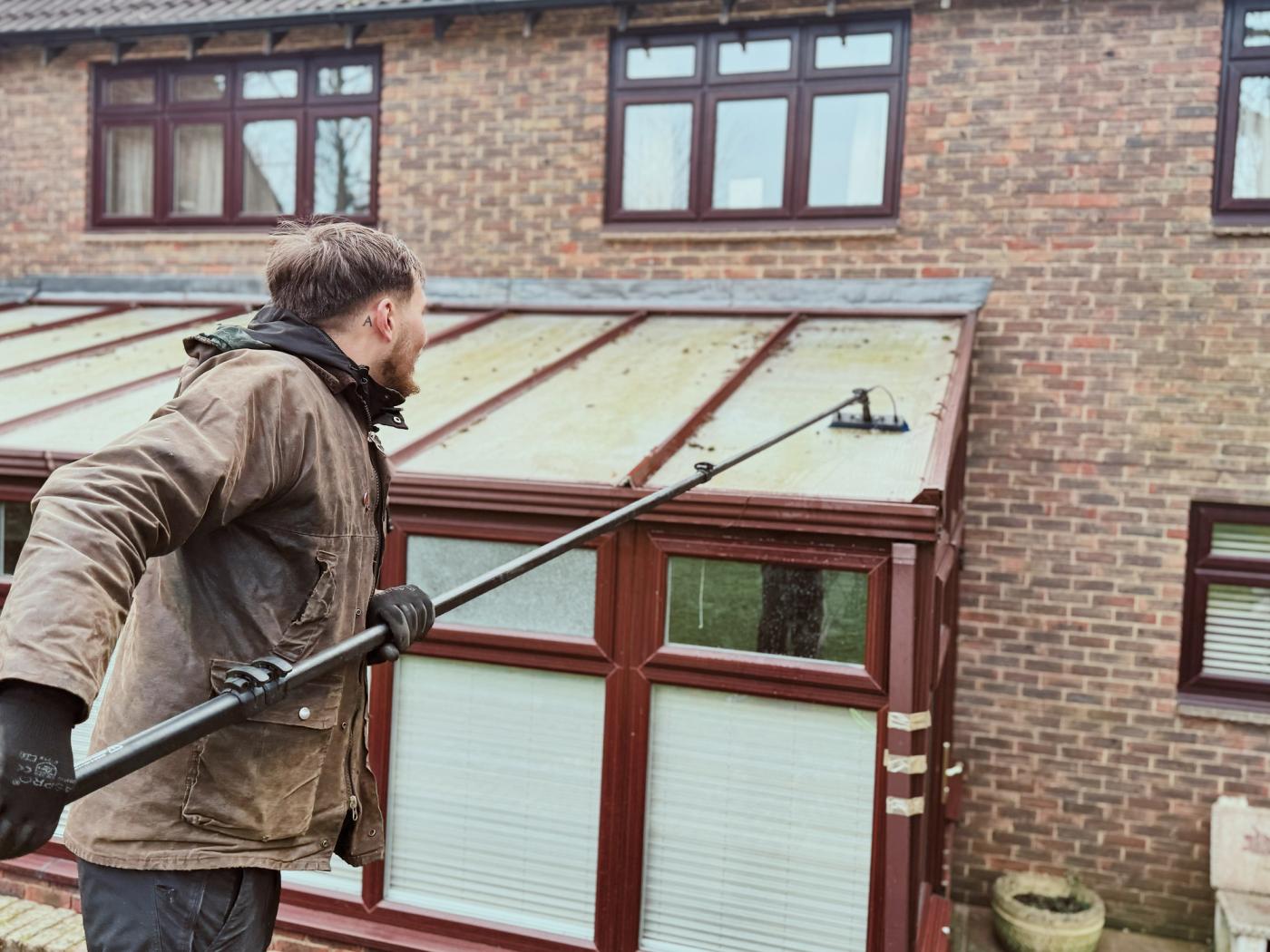
Pure water cleaning is ideal for conservatory glass and frames. Deionised water dries clear, leaves no mineral deposits and cleans without chemicals. A pole system allows the work to be carried out from the ground in many situations, reducing the need for risky access.
Where algae, lichen or mildew has established on roof surfaces, low-pressure soft washing may be more suitable. This uses plant-safe biocides to treat growth at the source, helping surfaces stay clear for longer than pressure alone, without stripping the finish.
Why conservatory roofs become dirty so quickly
Conservatory roofs are exposed to the sky, surrounding trees, birds, rain and garden moisture. Their angle means debris settles and remains visible. Leaves collect in roof bars and gutters. Algae grows where moisture lingers. Bird mess dries onto glass. Pollen and dust form a film that softens the light inside.
A conservatory beneath trees will usually need more attention than one in an open position. North-facing or shaded roofs also green more quickly because they dry slowly after rain. In London, city dust can dull the glass. In Kent, pollen, garden debris and organic growth are often the greater issue.
Because conservatories are designed to bring light into the home, even a thin layer of residue can change how the room feels.
Why pressure washing is usually the wrong answer
High pressure can be too aggressive for conservatory roofs. It may damage seals, force water beneath joints, mark softer materials or disturb roof details. It can also send dirty water down windows, frames and surrounding walls.
The goal is not to blast the roof clean. It is to clean it carefully, preserving the structure and surface. Pure water and low-pressure soft washing offer a more considered approach.
Pure water for conservatory glass and frames
Conservatory glass benefits from pure water because the finish is clear and residue-free. Ordinary tap water can leave mineral spots as it dries, while detergents can leave a film. Pure water has had minerals removed, so it dries clear and leaves no deposits.
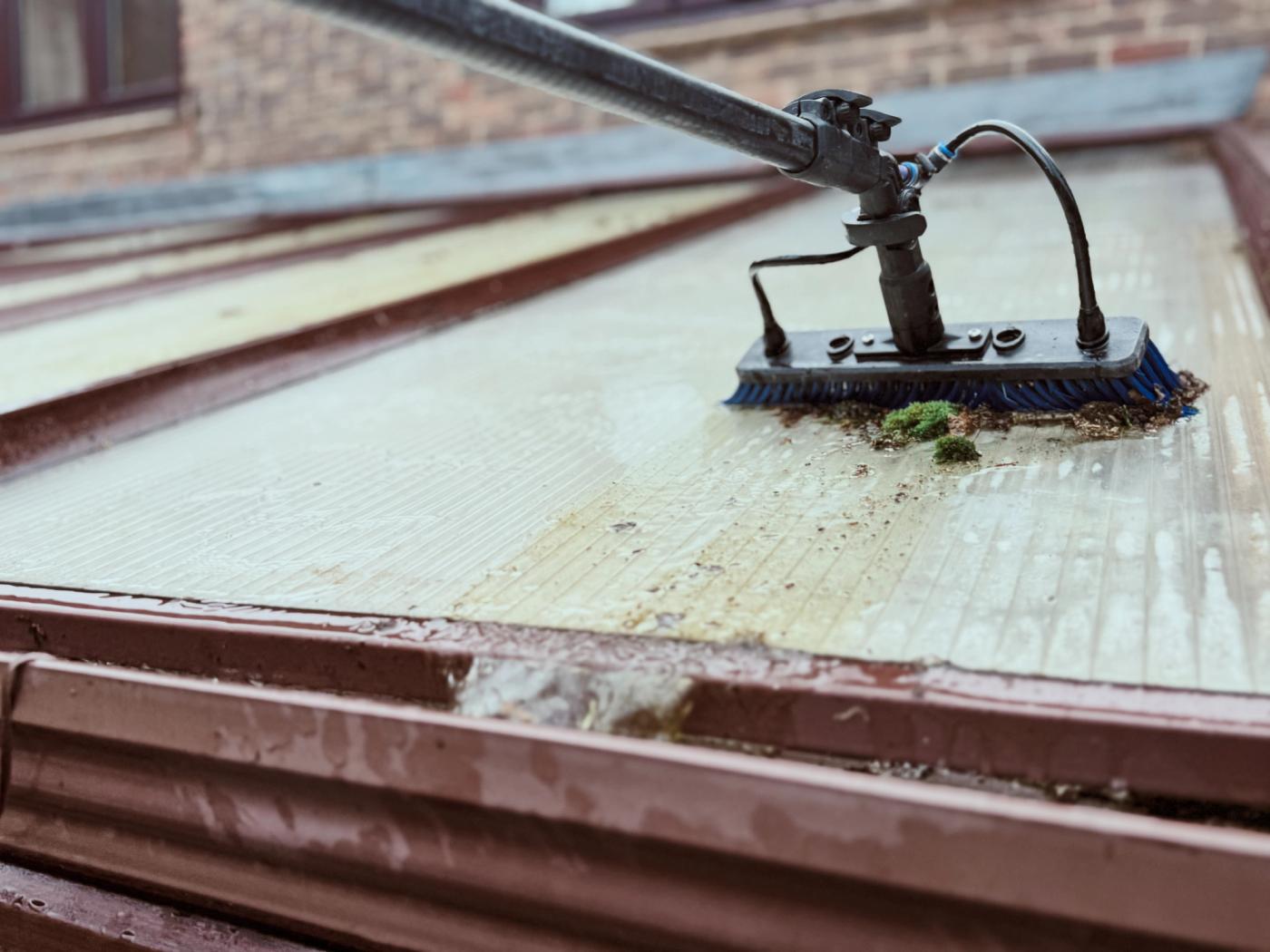
The pole system also helps reach awkward panes, roof slopes and frame lines from the ground. The brush loosens dirt, and the water rinses it away. This is particularly useful where the roof has collected pollen, dust, bird mess and light residue.
Frames should be cleaned alongside the glass. Dirty frames and roof bars can wash residue back onto panels during rain. Keeping the structure clean helps the roof stay fresher.
Soft washing for algae on conservatory roofs
Where algae, lichen or mildew is the main issue, soft washing may be appropriate. Willow Alexander uses low pressure and plant-safe biocides to lift organic growth at the source on surfaces including conservatory roofs. This helps kill the growth so surfaces stay clear far longer than pressure washing.
Soft washing must still be matched to the material. Glass, frames, seals and roof surfaces should be assessed before treatment. Nearby planting, drainage and run-off also need care. A professional approach protects the surrounding garden as well as the conservatory.
Soft washing is especially useful for shaded roofs where green growth returns quickly after ordinary cleaning.
What about conservatory gutters?
Conservatory gutters are small but important. Leaves, moss and roof debris can collect around the edges, leading to overflow. Dirty water may then run down frames and glass, spoiling the clean finish.
When a conservatory roof is cleaned, it is sensible to look at the gutters and drainage points. If they are blocked, the roof may become dirty again more quickly. Overflow can also stain nearby walls, patios and frames.
For the main house gutters, Willow Alexander uses a high-suction SkyVac system from the ground, fully insured, clearing the whole run in one pass. Conservatory drainage should be considered as part of the same broader water management picture.
How often should a conservatory roof be cleaned?
The right frequency depends on trees, shade, roof material and how important the conservatory is to daily life. A conservatory used as a main living or dining space will feel dull sooner if the roof is dirty. A shaded roof beneath trees may need more frequent attention than an open, sunny one.
A seasonal clean is often helpful after autumn and winter, when leaf debris and damp have had time to settle. Spring is a natural moment because the room begins to be used more often and brighter light reveals marks.
If algae appears quickly after cleaning, the roof may need soft washing rather than simple rinsing.
Safety matters more than speed
Conservatory roofs are not designed to be walked on casually. Access, glass, seals and roof structure all need respect. A rushed clean can cause damage or personal risk. Professional equipment allows the work to be approached from the ground where possible, with methods chosen for the surface.
The same restraint applies to cleaning products. Strong chemicals or abrasive tools can damage frames, seals or surrounding planting. Plant-safe biocides, used properly, are a better fit where organic growth needs treatment.
A safe clean is one that improves the roof without compromising it.
A brighter conservatory starts above you
A conservatory roof shapes the whole room beneath it. When it is dull or green, the space loses light and freshness. When it is cleaned carefully, the room feels brighter, the garden view improves and the structure looks cared for again. The right method is not the harshest one. It is the one matched to the surface: pure water for glass and frames, low-pressure soft washing for algae, and careful attention to drainage around the roof.
Common questions
How do you clean a conservatory roof safely?
A conservatory roof should be cleaned without walking on it or using harsh pressure. Pure water is suitable for glass and frames, while low-pressure soft washing may be used for algae on suitable roof surfaces.
Can you pressure wash a conservatory roof?
High pressure is usually not the best choice because it can damage seals, force water into joints or mark materials. A gentler, surface-matched method is safer.
Why does my conservatory roof go green?
Green staining is usually algae, encouraged by shade, moisture, trees and slow drying after rain. Soft washing treats this growth at the source.
Does pure water cleaning work on conservatory glass?
Yes. Pure water dries clear, leaves no mineral deposits and gives conservatory glass a spotless, streak-free finish without chemicals.