Black roof streaks are usually organic growth, not simple dirt. Learn what causes them and why careful soft washing is the safer route.
Black streaks on roof surfaces can make an otherwise well-kept home look tired long before the roof itself is failing. These marks are often mistaken for soot, dirt or age, but they are usually a form of organic growth encouraged by moisture, shade and airborne spores. On some roofs, algae, lichen and mildew settle into the surface and spread in visible trails. Removing them safely requires care, because a roof should never be treated as just another hard surface.
What causes black streaks on roof surfaces?
Black streaks on roof tiles are commonly linked to algae and other biological growth. Moisture gives these organisms the conditions they need, while shade slows drying after rain. Over time, the growth becomes more visible, especially on roof slopes that face away from the sun or sit beneath trees.
The streaking pattern often follows the way water moves down the roof. Rain carries spores and organic residue along the tile surface, leaving darker trails. In some cases, lichen appears as pale or crusted patches, while algae creates darker staining. Moss may also be present, particularly on damp or shaded roofs.
This is why one side of a roof may look much worse than another. A north-facing slope, a section beneath overhanging trees, or a roof near dense planting will usually stay wetter for longer.
Are black roof streaks just cosmetic?
At first, black streaks may seem purely visual. They certainly affect kerb appeal, especially on homes with pale render, crisp brickwork or carefully maintained gardens. A stained roof can draw the eye even when the windows, paths and planting are immaculate.
However, organic growth can also hold moisture. Moss, algae and lichen may keep parts of the roof damp for longer after rain. Loose moss can fall into gutters, causing blockages and overflow. Once gutters begin to spill, the problem moves from the roof to walls, windows, fascias and the ground below.
The presence of staining does not automatically mean the roof is damaged, but it is a sign that the roof environment is supporting growth. Treating it carefully can improve appearance and reduce the debris that contributes to gutter problems.
Why roofs should not be aggressively pressure washed
A roof is not a patio. High pressure can be risky because it may disturb tiles, drive water beneath overlaps, damage surface coatings or loosen material. It can also create mess, sending moss and dirty water into gutters, across walls and onto surrounding areas.
The visible result may look dramatic at first, but pressure alone does not always deal with the root of biological growth. If algae and lichen are not treated properly, staining can return.
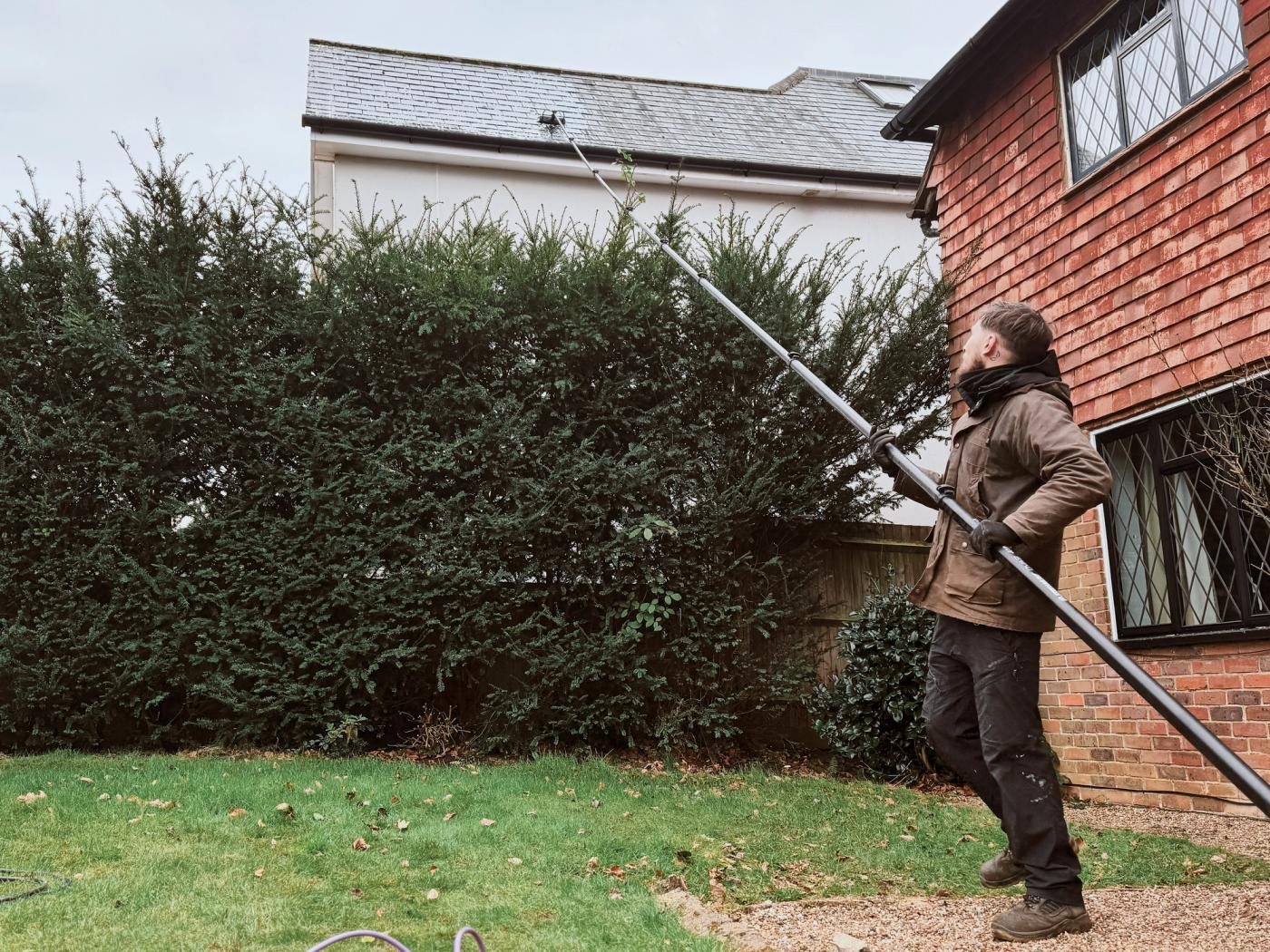
Soft washing is a more considered approach for suitable roofs. It uses low pressure and plant-safe biocides to lift algae, lichen and mildew at the source, without relying on harsh force.
How soft washing removes roof streaks safely
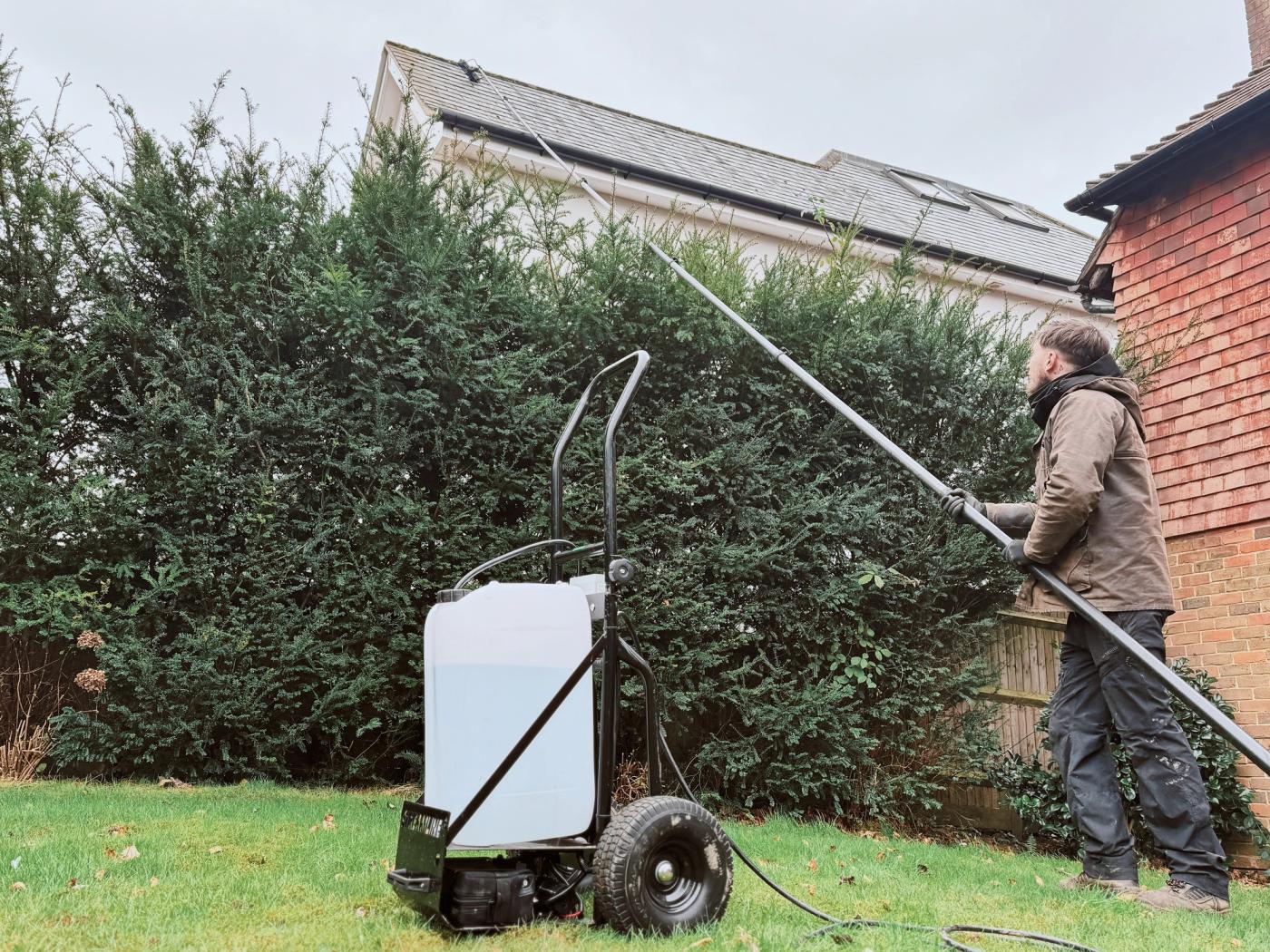
Soft washing works by treating the organisms causing the staining. A professional application is made at low pressure, allowing the biocidal treatment to begin breaking down algae, lichen and mildew. The process is controlled and suited to surfaces where pressure washing would be too aggressive.
On roofs, the aim is not simply to blast away visible marks. The aim is to clean in a way that respects the roof covering, surrounding gutters, planting and drainage. The treatment may continue working after application, with the appearance improving over time as dead growth releases and weathering helps clear the surface.
This patient approach is especially useful for roofs with established staining. Some marks fade gradually rather than disappearing instantly, but the result is achieved without unnecessary force.
What role do gutters play?
Gutters are closely connected to roof staining. Moss and organic debris often wash down into gutter channels, where they combine with leaves, silt and grit. Once the gutter is blocked, rainwater overflows. That overflow can stain render, soak brickwork, mark windows and leave green streaks on fascias.
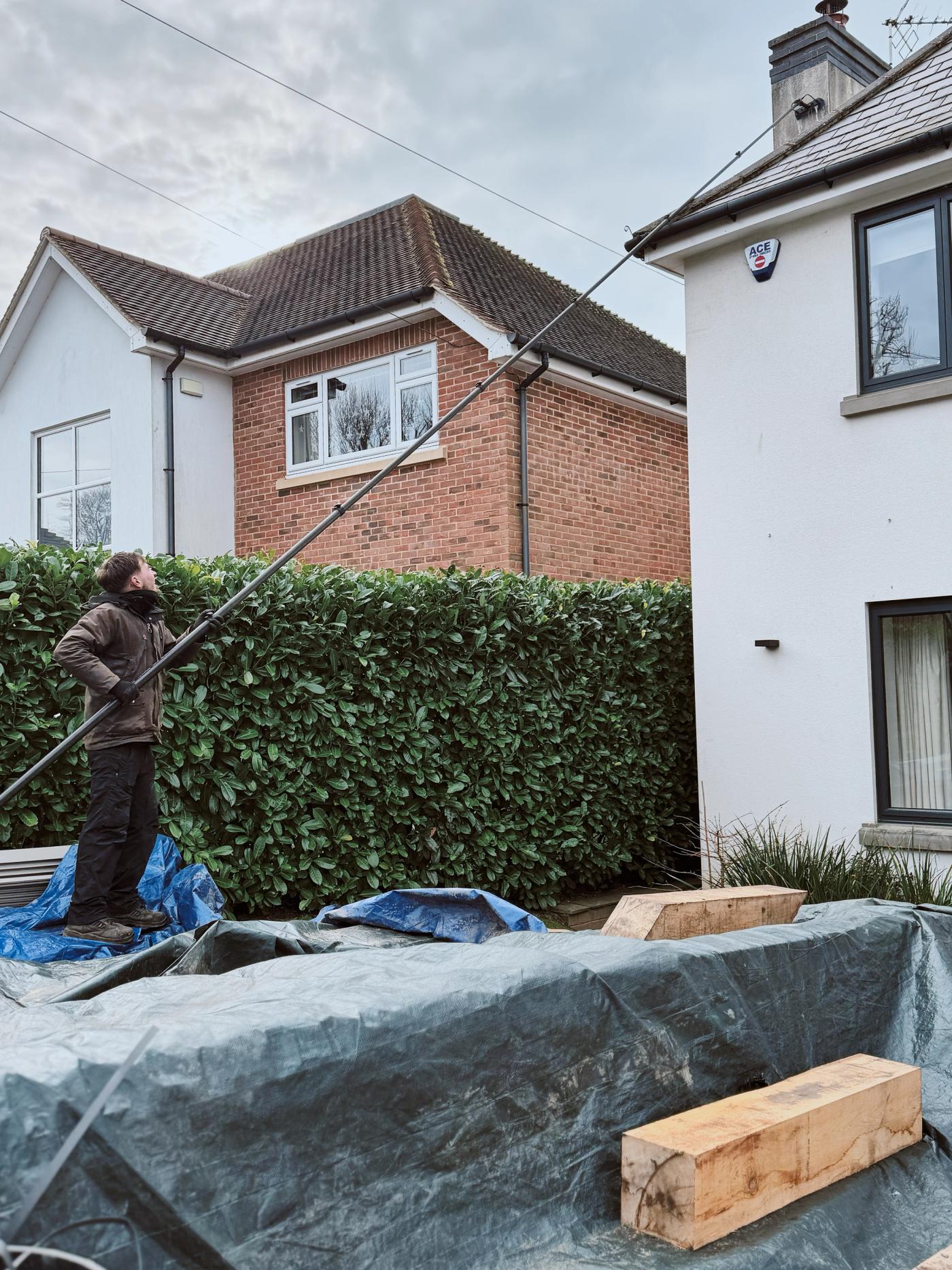
If a roof has visible moss or streaking, the gutters should be checked too. Willow Alexander clears gutters ladder-free using a high-suction SkyVac system from the ground, fully insured, clearing the whole run in one pass. This removes the debris that roof growth often creates.
In many cases, roof treatment and gutter clearing belong in the same maintenance plan. Cleaning the roof without clearing the gutters may leave the drainage system struggling. Clearing the gutters without addressing heavy roof moss may mean the blockage returns.
Signs roof growth is affecting your gutters
You may notice pieces of moss on paths or patios after windy weather. Gutters may overflow during rain even if they were cleared not long ago. Downpipes may block at the outlet, or dark streaks may appear beneath the roofline.
Windows below overflowing gutters may become dirty soon after cleaning, and white uPVC roofline details may turn green. These signs suggest that roof debris is moving through the rainwater system and affecting more than the roof's appearance.
Can black roof streaks be prevented?
No roof can be protected completely from weather and airborne spores, but certain conditions make staining more likely. Shade, overhanging trees, damp valleys and poor airflow all encourage organic growth. Keeping gutters clear, trimming back nearby branches where appropriate, and treating early staining before it becomes heavy can all help.
A regular exterior cleaning calendar is useful. Roofs do not need the same frequency as windows, but they should be observed during seasonal checks. Autumn and spring are good times to look for moss movement, blocked gutters and staining that has worsened over winter.
Soft washing at the right moment can reset the roof's appearance and slow the return of growth.
Why roof cleaning improves the whole exterior
A stained roof changes the way a home is read from the street. Even if the windows are clean and the garden is immaculate, black streaks can make the property look older or less carefully kept. This is particularly noticeable on homes with pale render, painted masonry, light stone or white uPVC details.
Cleaning roof staining can bring balance back to the exterior. The roofline feels sharper, walls look fresher and gutters are less likely to be filled with organic debris. When paired with window cleaning, gutter clearing and uPVC restoration, roof soft washing becomes part of a broader approach to home care.
It is not about chasing perfection. It is about preventing avoidable staining from distracting from the quality of the property.
When should you seek professional advice?
Seek advice if roof staining is spreading, if moss is regularly falling into gutters, or if one elevation looks markedly darker than the rest. You should also ask for a professional view before attempting any roof cleaning yourself. Roof access carries obvious risks, and the wrong method can damage surfaces.
A professional team can assess whether soft washing is suitable, whether gutter clearing should be carried out first or afterwards, and how nearby planting or drainage should be protected.
The most important point is restraint. Roofs need careful treatment, not forceful cleaning.
A safer route to a cleaner roofline
Black streaks on roof surfaces are common, but they should not be ignored or attacked with the harshest possible method. They are usually a sign of organic growth, moisture and shade. Soft washing offers a safer, more thoughtful answer, treating algae, lichen and mildew at the source while respecting the roof. Combined with proper gutter clearing, it helps protect the home's appearance and the rainwater system that keeps the exterior dry.
Common questions
What causes black streaks on roof tiles?
Black roof streaks are often caused by algae or other organic growth. Shade, moisture, trees and slow drying after rain all make the problem more likely.
Can black roof streaks be removed without pressure washing?
Yes. Soft washing uses low pressure and plant-safe biocides to treat algae, lichen and mildew at the source, which is usually safer for suitable roof surfaces than aggressive pressure washing.
Do roof streaks mean my roof is damaged?
Not necessarily. Staining often indicates organic growth rather than structural damage, but it can hold moisture and contribute to gutter blockages, so it is worth dealing with carefully.
Should gutters be cleared after roof cleaning?
Gutters should be checked when roof growth is present because moss and debris often wash into the guttering. Willow Alexander uses a ladder-free SkyVac system to clear the whole run from the ground.