Gutter guards can help in some homes, but they are not a complete answer. Learn when they are useful and why gutters still need checking.
Are gutter guards worth it? For some homes, they can reduce the amount of leaves and larger debris entering the gutter. For others, they create a false sense of security. The question is not whether gutter guards are good or bad in every situation. It is whether they suit your roof, trees, rainfall, gutter profile and maintenance routine. Even with guards fitted, gutters still need checking, because silt, moss, seeds and smaller debris can still affect water flow.
Are gutter guards worth it for London and Kent homes?
Gutter guards may be worth considering if your home sits beneath trees that drop large leaves, twigs or seed pods. They can help reduce the speed at which gutters fill, especially during autumn. In leafy parts of Kent, including Sevenoaks, Chislehurst and Beckenham, this may be useful. In London areas with mature street trees, they may also have a place.
However, guards do not make gutters maintenance-free. Roof moss, grit, silt and fine debris can still gather. Leaves may sit on top of the guard and slow water entry. Seeds can root in damp material. In some cases, guards make inspection and cleaning more awkward because the cover must be lifted or worked around.
A clear gutter is the goal. Gutter guards are only helpful if they support that goal rather than hiding a developing problem.
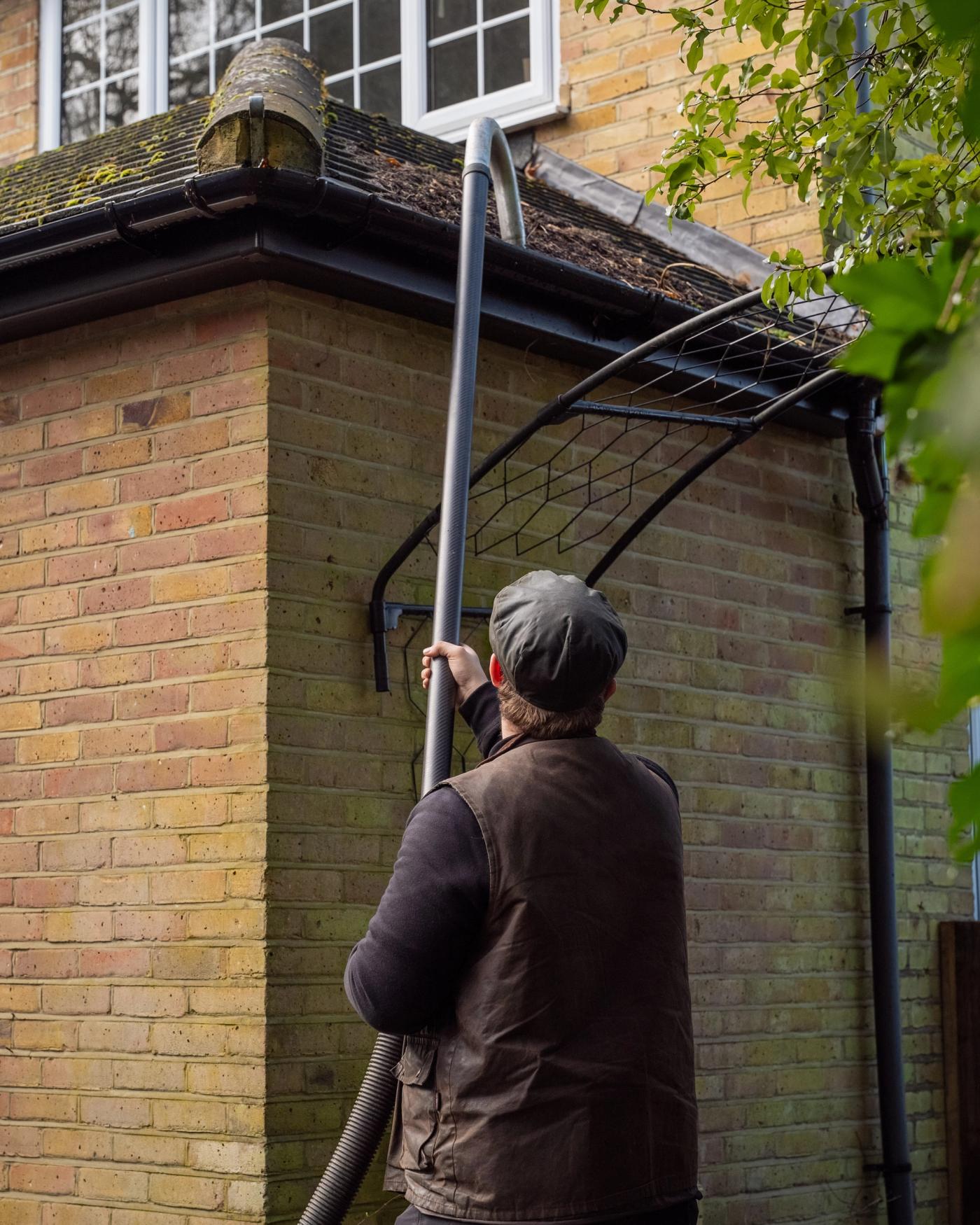
What gutter guards can help with
The main benefit of gutter guards is that they can reduce large debris entering the gutter channel. Leaves, twigs and some roof debris may be held back, allowing rainwater to move more easily through the system. This can be particularly helpful in homes beneath deciduous trees, where gutters fill quickly during autumn.
They may also reduce how often heavy debris needs removing. For homeowners who have repeated leaf blockages in the same run, guards can be one part of the answer.
They are not a cure for every gutter issue. If the roof sheds moss, if downpipes block with silt, if gutters are poorly aligned, or if rainfall overwhelms the system, guards alone will not solve the problem.
What gutter guards cannot do
Gutter guards cannot stop all fine material. Moss fragments, grit, pollen, dust, seed matter and silt can still gather. They cannot correct sagging gutters, poor falls, leaking joints or undersized drainage. They also cannot prevent dirty water from staining fascias if the gutter is already overflowing.
In some settings, guards may become a surface for debris to sit on. If leaves mat together across the top, water can overshoot the gutter rather than entering it properly. This is why regular inspection remains important.
Why gutters still need clearing with guards fitted
Even guarded gutters need maintenance. The roof continues to shed material, weather continues to move debris, and biological growth can still develop. If silt builds up below a guard, it may not be visible from the ground. Water then backs up, overflows or finds a weak point.
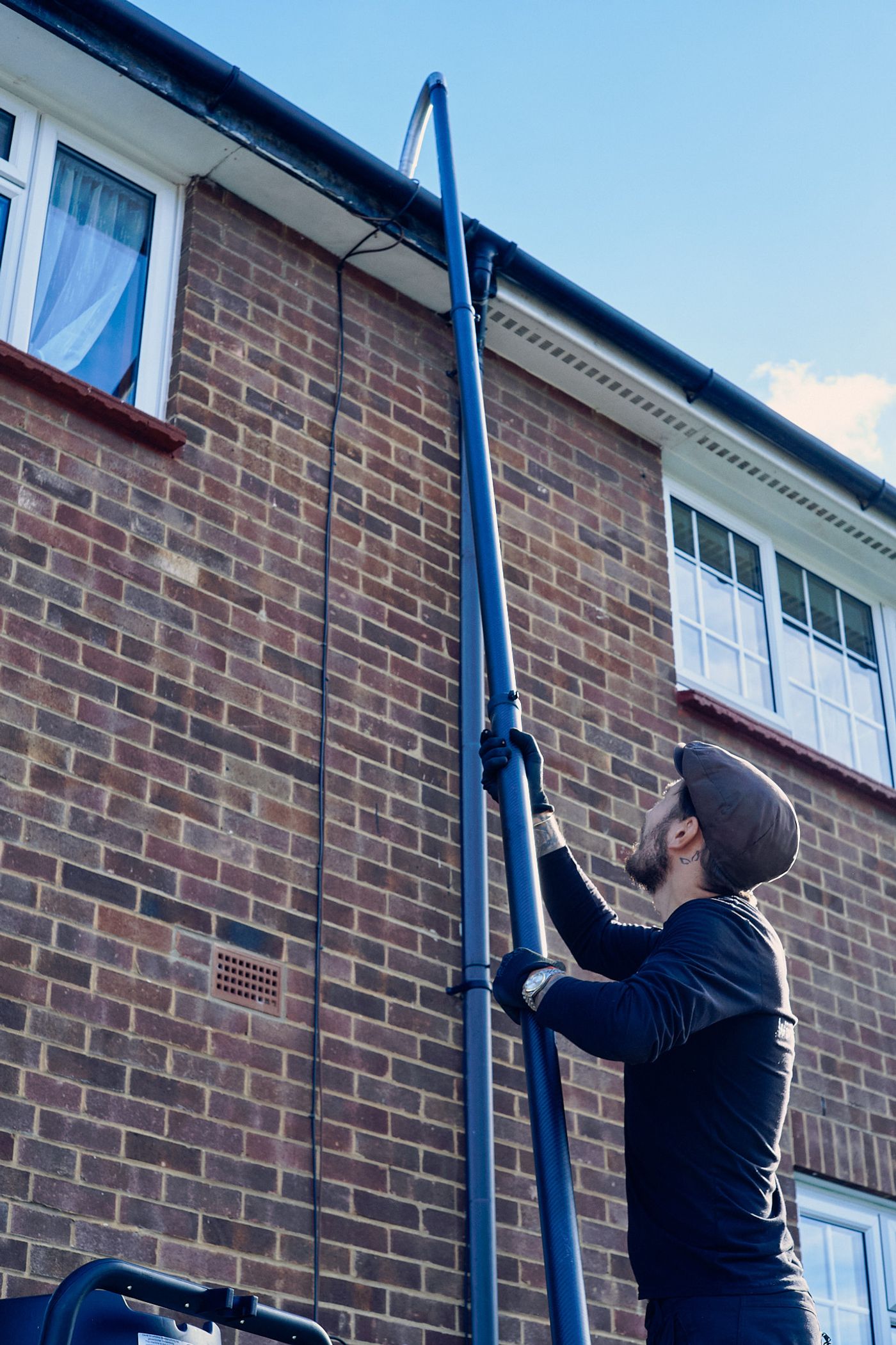
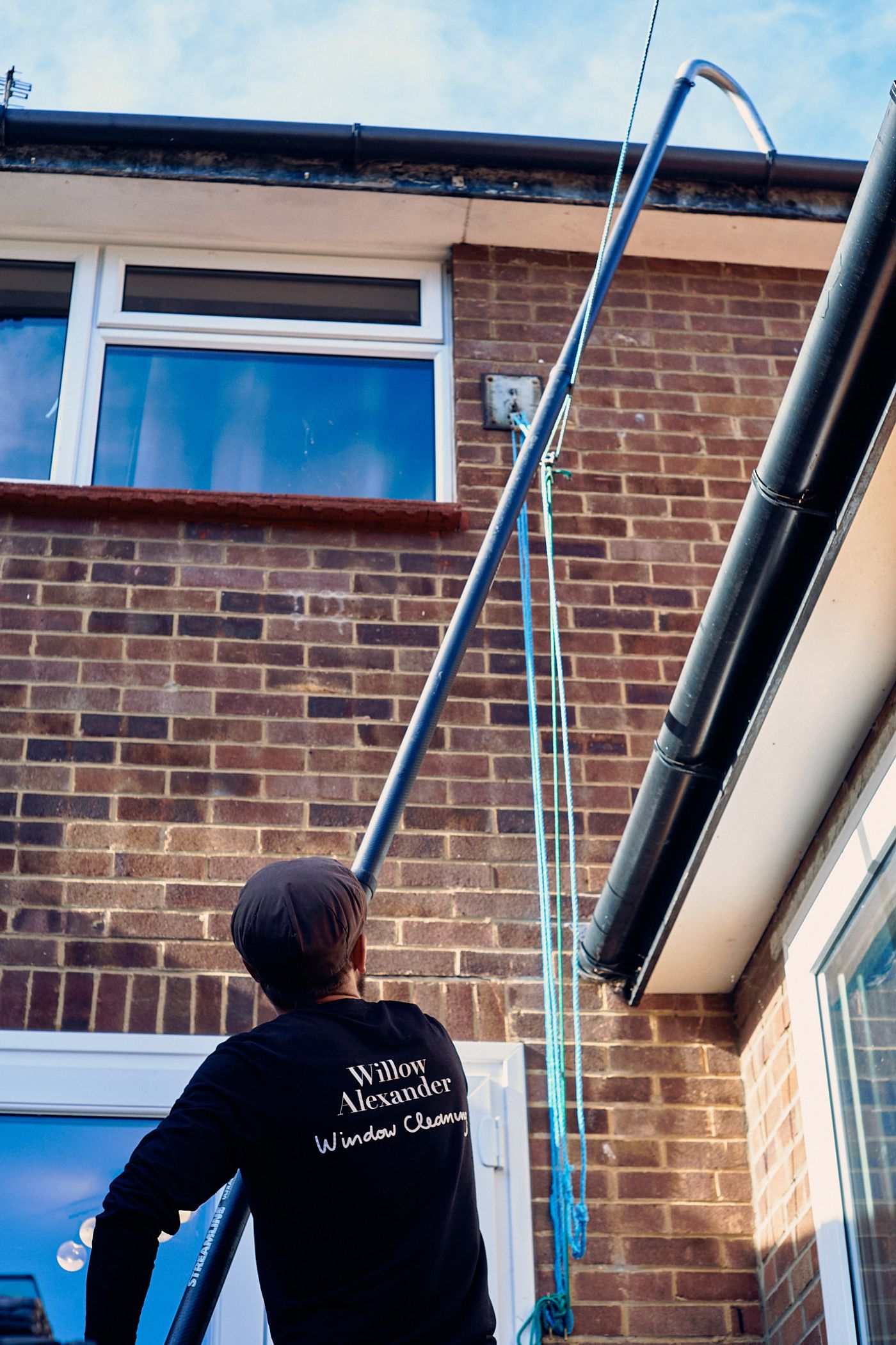
Willow Alexander clears gutters ladder-free using a high-suction SkyVac system from the ground, fully insured, clearing the whole run in one pass. This is useful for homes with or without guards, although the exact approach depends on the guard type and access.
A professional check can reveal whether guards are helping or hindering. In some cases, a guarded gutter is still full beneath the cover. In others, the guard has done its job and only light maintenance is needed.
How gutter guards affect soffits and fascias
When gutters fail, soffits and fascias often show the evidence. Water spilling over the edge can leave grey, green or brown staining on white uPVC. It can also encourage algae and make the roofline look tired. If guards cause water to overshoot, or if they hide a blockage, the staining may continue even though the gutter appears protected.
Willow Alexander restores uPVC frames, soffits and fascias to a clean, even white. But if gutters are still overflowing, the staining can return. The practical order is usually to resolve water flow first, then clean the affected uPVC.
This is why gutter maintenance and roofline cleaning belong together. A bright fascia is easier to preserve when rainwater is moving where it should.
Are gutter guards suitable for period homes?
Period homes need particular care. Gutters may be cast iron, unusually shaped, decorative or difficult to access. Adding guards without understanding the existing system can create problems. Water flow, roof pitch, valley details and drainage capacity all matter.
For listed or period properties, it is worth seeking advice before fitting anything that changes how the gutter behaves or how it looks. Sometimes careful, regular clearing is a better answer than adding a product to a sensitive roofline.
The aim should always be water management with minimal intervention. If a guard helps quietly and can be maintained, it may be useful. If it complicates inspection or affects appearance, it may not be right.
When gutter guards may be a poor choice
Gutter guards may be less suitable where roof moss is the main problem, where gutters already have poor fall, where access for cleaning becomes difficult, or where fine silt is the main cause of blockage. They may also be unhelpful if leaves are likely to mat across the surface and stop water entering.
They are also not a substitute for clearing downpipes. A downpipe can block even when the gutter channel looks fairly clear. If the outlet is obstructed, water backs up across the whole run.
Before fitting guards, it is sensible to have the gutters cleared and observed during rain. This helps identify the real problem.
The better question: what is blocking your gutters?
Rather than beginning with a product, begin with the cause. Are leaves filling the gutter in autumn? Is roof moss sliding into the channel? Is silt collecting at the outlet? Is a downpipe blocked? Is water overshooting because of roof pitch or gutter alignment?
Once the cause is clear, the answer becomes easier. Guards may help with large leaves. Gutter clearing may be enough. Roof moss may need separate attention. Fascias may need cleaning once overflow is controlled.
A careful approach prevents money and effort being spent on the wrong solution.
A sensible place for gutter guards
Gutter guards can be useful, but they should be treated as an aid, not an end to maintenance. They may reduce leaf build-up in the right setting, but they do not remove the need for inspection, clearing and proper water flow. For London and Kent homes, the best protection is still a clear, functioning gutter system, supported by sensible roofline care and prompt attention when overflow appears.
Common questions
Are gutter guards worth it?
Gutter guards can be worth it for homes affected by large leaves and twigs. They are less useful when the main issue is moss, silt, poor alignment or blocked downpipes.
Do gutter guards mean I never need gutter cleaning?
No. Gutters with guards still need checking and may still need clearing. Fine debris, moss and silt can gather beneath or around the guard.
Can gutter guards cause overflow?
They can if leaves mat across the top or if water cannot enter the gutter properly. Overflow can then stain fascias, walls and windows.
Should I clear gutters before fitting guards?
Yes. Gutters should be clear before guards are fitted, and the cause of previous blockages should be understood first.